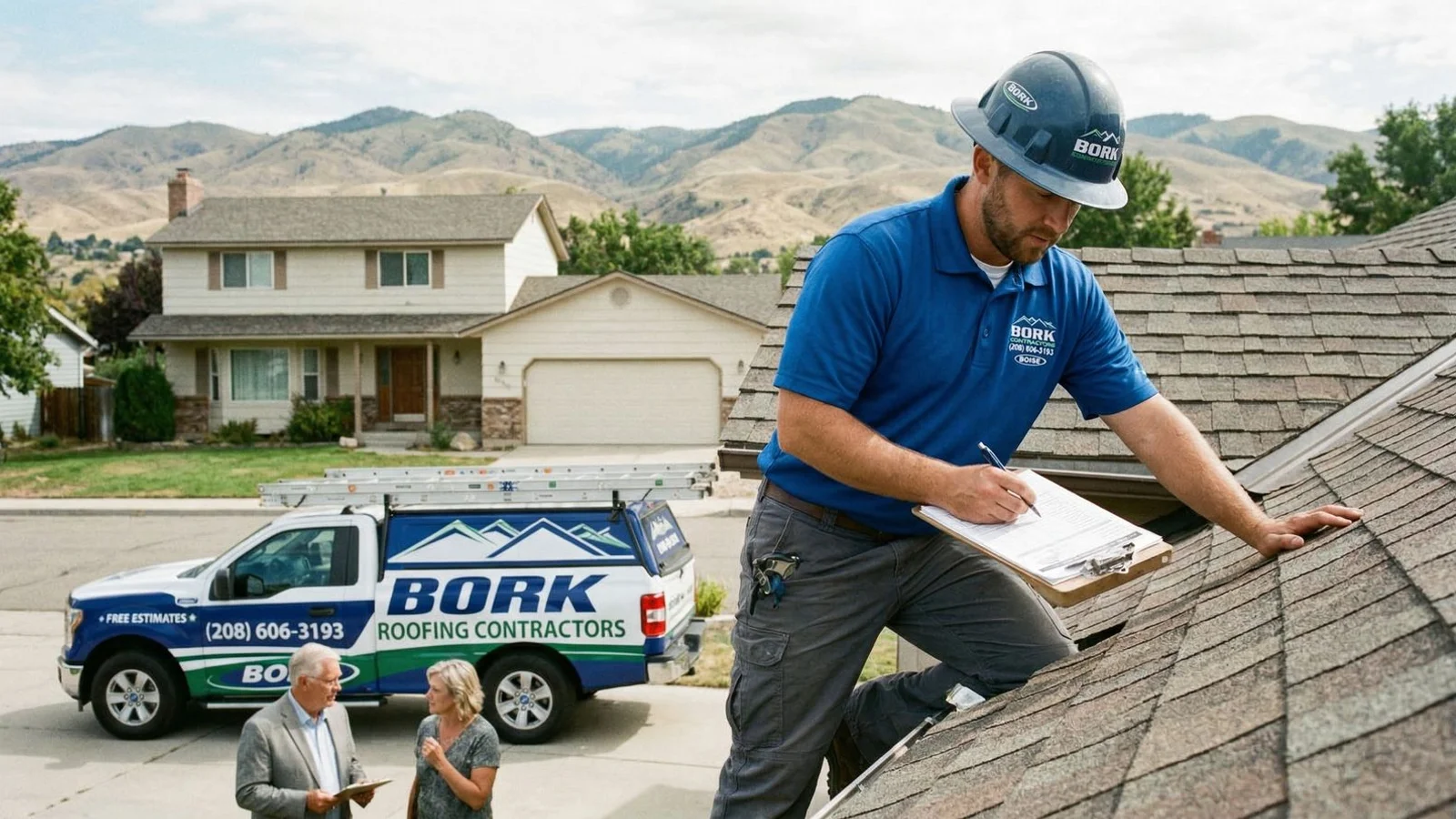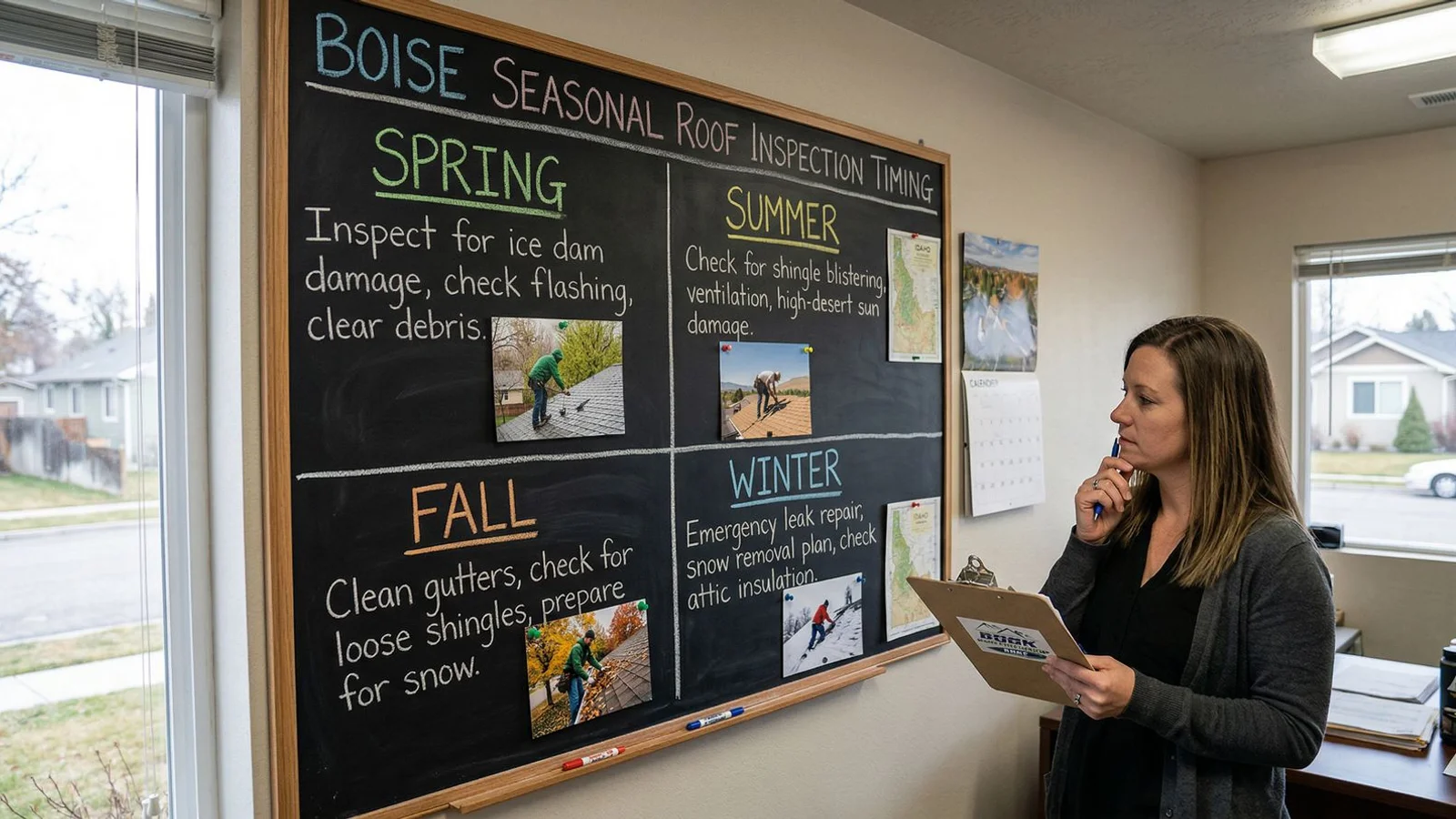
A “free roof inspection” means something entirely different depending on the contractor you call. Some treat it as a quick ten-minute drive-by with a heavy sales pitch waiting at the end. We take a completely different approach.
As a professional service team with decades of field experience, our process is built around hard data and thorough diagnostics.
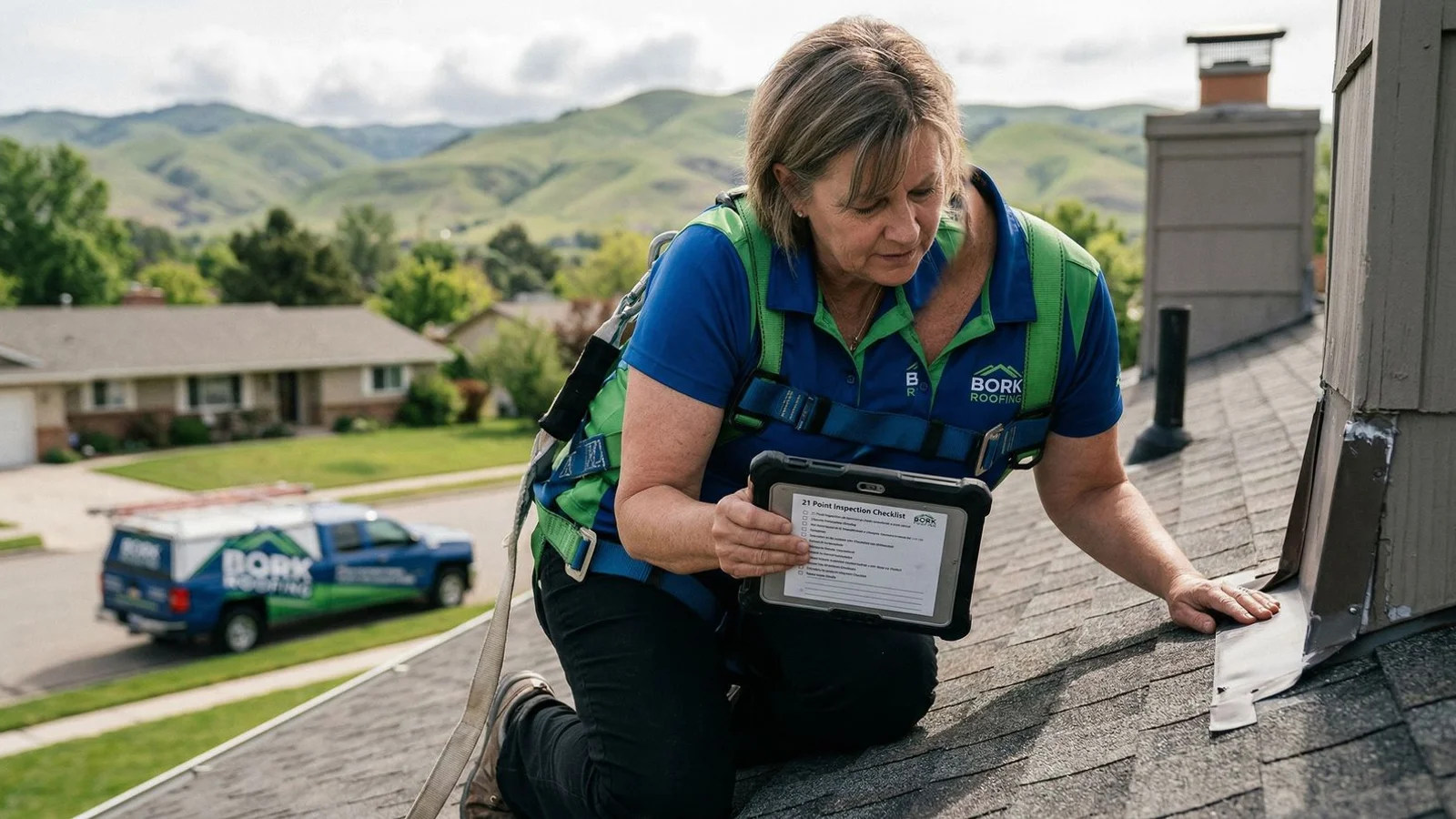
A proper evaluation requires getting onto the surface and into the attic to find hidden problems before they escalate. That is exactly what our structured 21-point assessment provides.
Let’s examine the exact checkpoints we cover to protect your home and your budget.
Exterior Roof Surface
The top layer of your home takes the hardest beating from Idaho weather. Our inspectors start by walking the entire surface to evaluate the primary weatherproofing layer.
These first four checkpoints tell a clear story about the age and condition of your materials.
- 1. Shingle condition and age estimate. We look for curling, cupping, cracking, brittleness, and granule loss. Asphalt shingles typically lose one to two percent of their granules annually just from standard UV and rain exposure.
- 2. Granule loss patterns. Localized bald spots often indicate direct impact damage from hail. Widespread loss simply points to a material reaching the end of its useful life.
- 3. Visible damage, impacts, and patches. Our team documents any previous repairs, severe storm impacts, or vandalism. Poorly executed past repairs often create the biggest future liabilities.
- 4. Moss, algae, and lichen growth. Organic growth on north-facing slopes traps moisture against the roof deck. A specific algae called Gloeocapsa magma actually consumes the crushed limestone filler inside asphalt shingles, significantly shortening their lifespan.
Valleys, Hips, and Ridges
Water volume and wind speed concentrate in very specific areas of your roof structure. We pay close attention to these high-stress zones because they fail much faster than flat sections.
A single compromised valley can channel hundreds of gallons of water directly into your ceiling during a heavy Treasure Valley downpour.
- 5. Valley condition. Open valleys, closed-cut valleys, and woven valleys each have different failure modes. Valleys handle up to 60 percent of a roof’s total rainwater runoff, making wear, granule loss, and sealant integrity critical check marks.
- 6. Hip and ridge cap condition. Federal Emergency Management Agency (FEMA) studies show that hip and ridge caps experience the highest aerodynamic uplift forces during severe storms. They almost always fail before your main field shingles.
- 7. Ridge ventilation. Our crew verifies the presence and functional condition of ridge vents, box vents, or turbine vents. Proper exhaust at the peak is mandatory for a healthy attic system.
Flashing and Penetrations
Any place a pipe, chimney, or wall breaks through the shingles creates a major vulnerability. Our structured assessment looks closely at the metal and rubber seals protecting these gaps.
According to 2025 insurance industry claims data, faulty flashing causes over 80 percent of residential roof leaks.
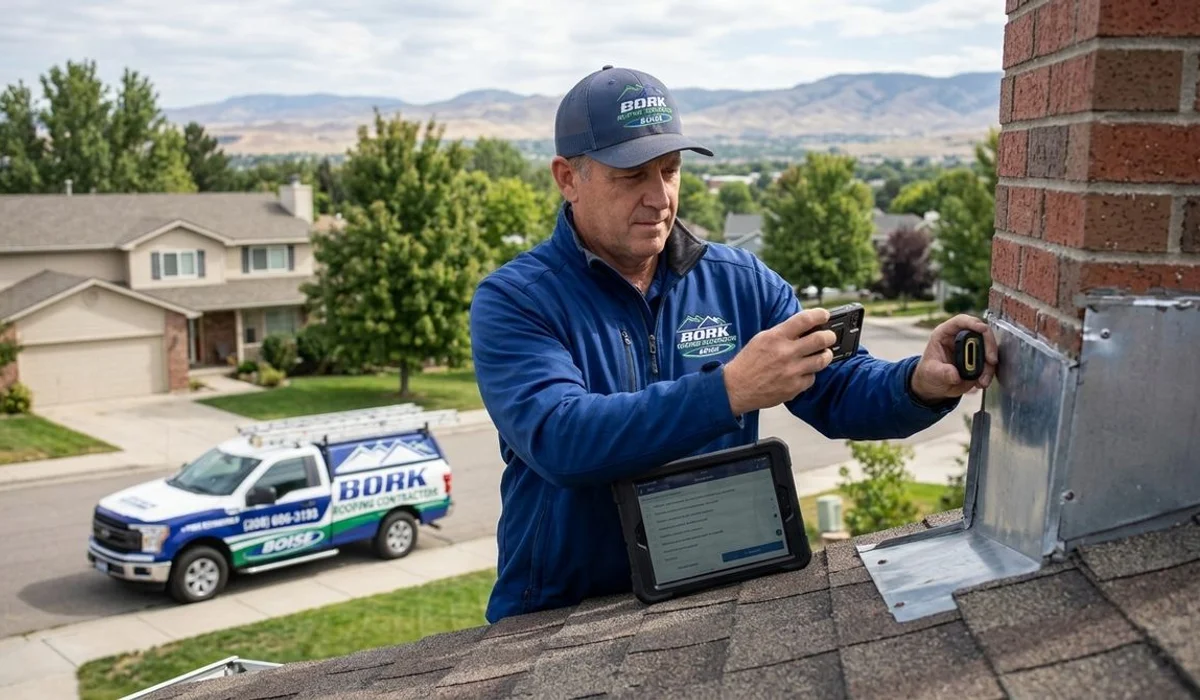
- 8. Chimney flashing. Step flashing, counter-flashing, and cricket condition require close inspection. This specific area remains the number one leak source on Boise homes.
- 9. Skylight flashing. Factory-installed skylight kits have very specific service lives. The rubber gaskets surrounding the glass often dry rot years before the surrounding shingles fail.
- 10. Wall step flashing. The junction where roof slopes meet vertical walls requires layered metal protection to shed water correctly.
- 11. Pipe boots and vent collars. Standard EPDM rubber pipe boots typically degrade and crack in seven to ten years due to harsh UV exposure. This makes rubber deterioration a frequent and hidden leak source.
- 12. Ventilation cap condition. We assess roof-mounted exhaust vents connected to bathrooms, kitchens, and attics to ensure they remain sealed and free of debris.
Drainage and Water Management
Shedding water off the shingles is only half the battle. Our inspection ensures that water moves safely away from your home’s foundation and structural wood.
Poor drainage creates massive winter liabilities.
- 13. Gutter attachment and alignment. Loose, sagging, or pulled-away gutters clearly indicate hidden fascia board damage.
- 14. Gutter drainage and debris. Clogged gutters guarantee the formation of destructive ice dams during cold Idaho winters.
- 15. Downspout condition and extension. Your downspouts must carry water a safe distance away from the foundation block.
- 16. Ice-and-water shield coverage. Building codes require this waterproof membrane to extend at least 24 inches inside the warm exterior wall line. We verify this coverage wherever it is visible from the attic space.
Structure and Interior
A comprehensive assessment never stops at the exterior. Our technicians enter the attic to diagnose the health of the entire roofing system from the inside out.
Trapped heat and moisture will destroy new shingles from below in just a few short years.
- 17. Fascia and soffit condition. Wood rot, localized staining, and peeling paint indicate chronic moisture issues.
- 18. Decking integrity from below. We check the underside of the wooden roof deck for dark stains, damp spots, or compromised sheathing panels.
- 19. Attic ventilation assessment. Intake vents at the soffit and exhaust vents at the peak must be perfectly balanced. The Federal Housing Administration mandates the 1/300 rule, which requires one square foot of ventilation for every 300 square feet of attic floor space.
- 20. Attic insulation depth and R-value. Insufficient insulation leaks warm home air into the attic, driving ice dam creation and skyrocketing energy bills. The US Department of Energy strongly recommends an R-49 to R-60 insulation value for cold-weather climates like Idaho.
- 21. Signs of active moisture intrusion. Rusty roofing nails, damp framing wood, or a distinct mildew smell signal immediate ventilation failures.
Inspection Deliverables and Timelines
Transparency is the core focus of our service model. You need clear documentation to make an informed financial decision.
Here is a breakdown of exactly what you receive and how long the process takes.
What You Receive
After the assessment concludes, you walk away with a complete diagnostic package. We provide:
- A comprehensive written report detailing the status of all 21 checkpoints.
- High-resolution photos documenting any problem areas or hidden damage.
- A professional estimate calculating the remaining lifespan of your current materials.
- An honest recommendation weighing the math of a repair versus a full replacement.
- A free, line-item quote for any required maintenance or construction.
Expected Timeframes
A thorough evaluation requires an investment of time to ensure accuracy. Rushing through the process guarantees missed details.
| Property Type | Exterior Inspection | Attic Inspection |
|---|---|---|
| Single-Family Boise Home | 45 to 90 minutes | 15 to 20 minutes |
| Commercial Buildings | 90 to 120+ minutes | Varies by access |
| Multi-Unit Properties | 120+ minutes | Varies by access |
Who Should Schedule an Assessment?
Regular maintenance catches small, cheap problems before they become massive interior leaks. Our team strongly suggests booking an evaluation if you fall into any of the following categories.
- Homeowners noticing warning signs. Curling shingles, thick granules washing out of downspouts, or sudden brown water stains on the ceiling demand immediate attention.
- Properties hit by severe weather. You should always book a post-storm inspection within 30 days of a confirmed hail or high-wind event in your neighborhood.
- Buyers and sellers in real estate transactions. We generate specialized, highly detailed written reports designed specifically for property negotiations.
- Proactive property owners. Routine maintenance checks every three to five years are a smart financial move for any roof over ten years old.
A failing roof rarely gives you a clear warning before it leaks into your living room. Our comprehensive 21-point process removes the guesswork and gives you total control over your property’s maintenance.
Stop wondering if your home is protected against the next major storm.
Take action today to secure your peace of mind.
Call (208) 545-8226 to schedule your free inspection. Our office responds to every request within 24 to 48 hours across Boise, Meridian, Nampa, Eagle, Caldwell, Star, Kuna, and Garden City.