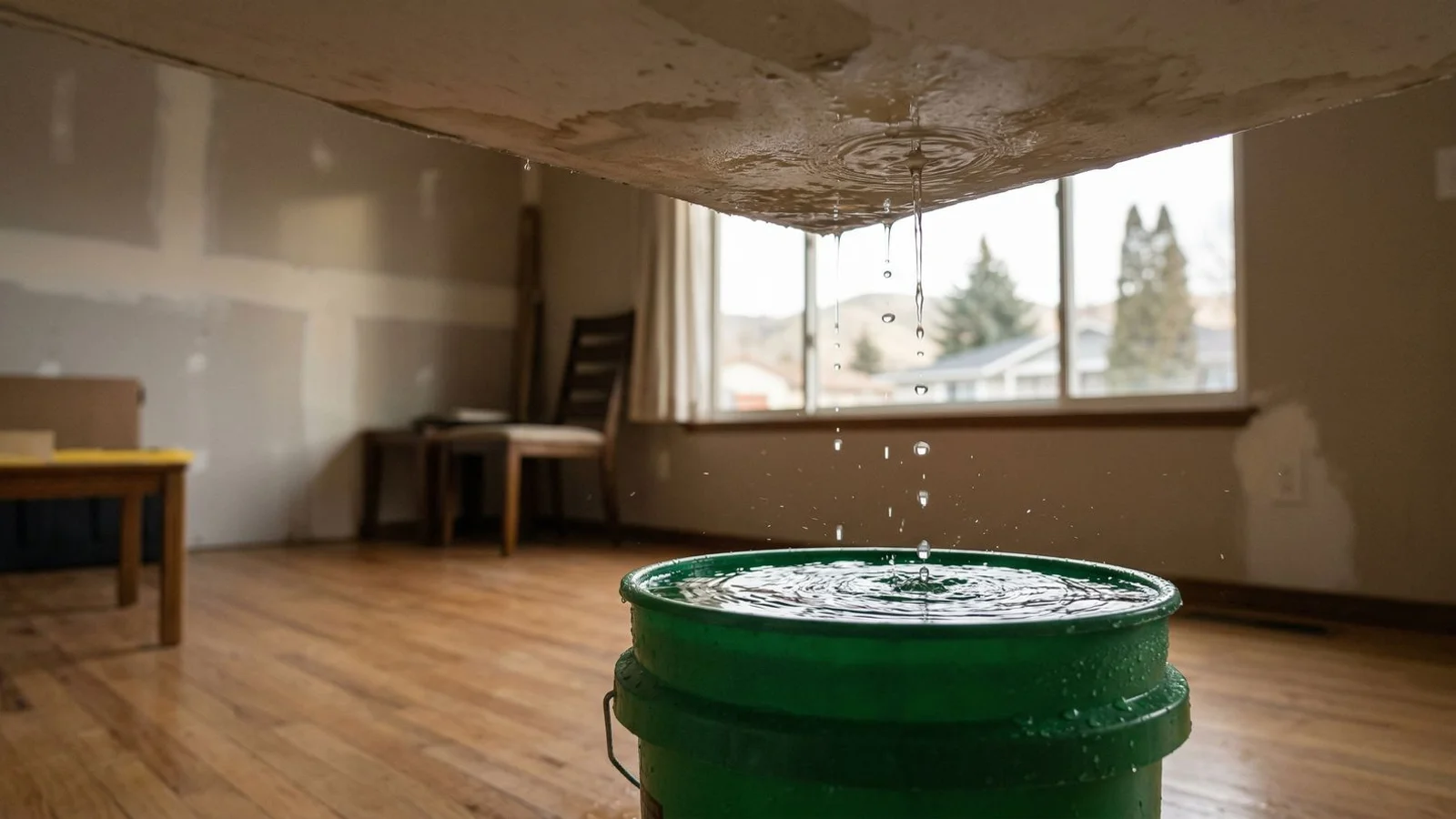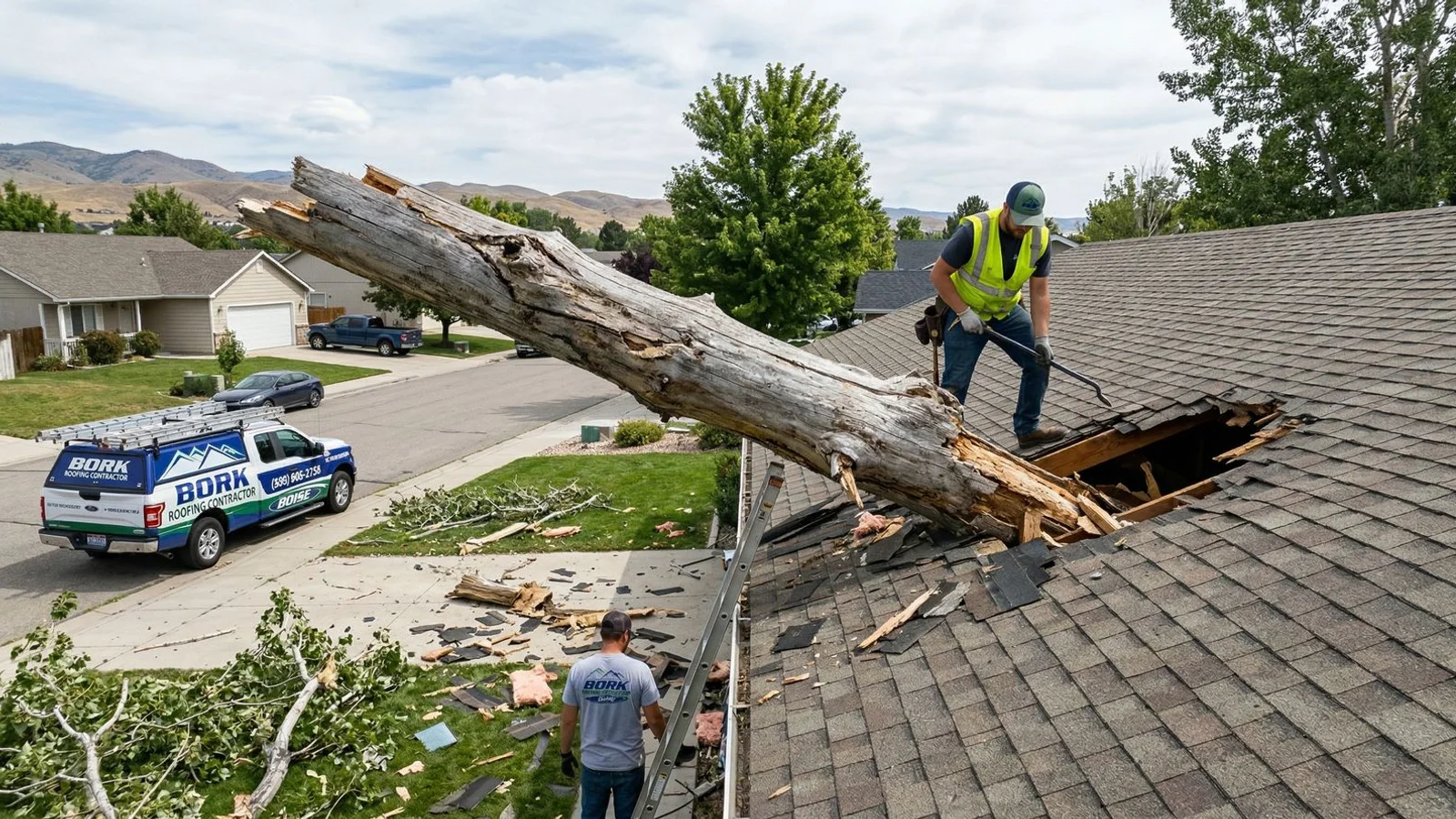
We see the same scenario every spring when storm season hits Ada County. A tree limb punctures a deck, or 60 mph wind gusts rip away a section of shingles. The clock starts ticking the moment water enters your home.
Every hour that passes multiplies your interior water damage.
Our emergency roof repair team knows that stopping this intrusion immediately is critical. With average Boise roof replacements exceeding $18,000 in 2026, understanding Emergency Roof Tarping in Boise: How It Works and Why It matters will save you from massive out-of-pocket expenses. Let’s look at the actual materials required, the risks of temporary hardware store fixes, and the exact steps to secure your property before the next rain.
What a Proper Emergency Tarp Actually Is
The thin blue plastic you grab from a local hardware store does not qualify as an emergency roof cover. Those products are typically 3-mil polyethylene and lack ultraviolet stability. A DIY sheet on a damaged roof usually fails after one or two typical Treasure Valley wind events. The material shreds, blows off, or channels water directly into new locations.
Our standard aligns with the US Army Corps of Engineers structural guidelines. A proper emergency barrier requires specific, heavy-duty materials to withstand Idaho weather.
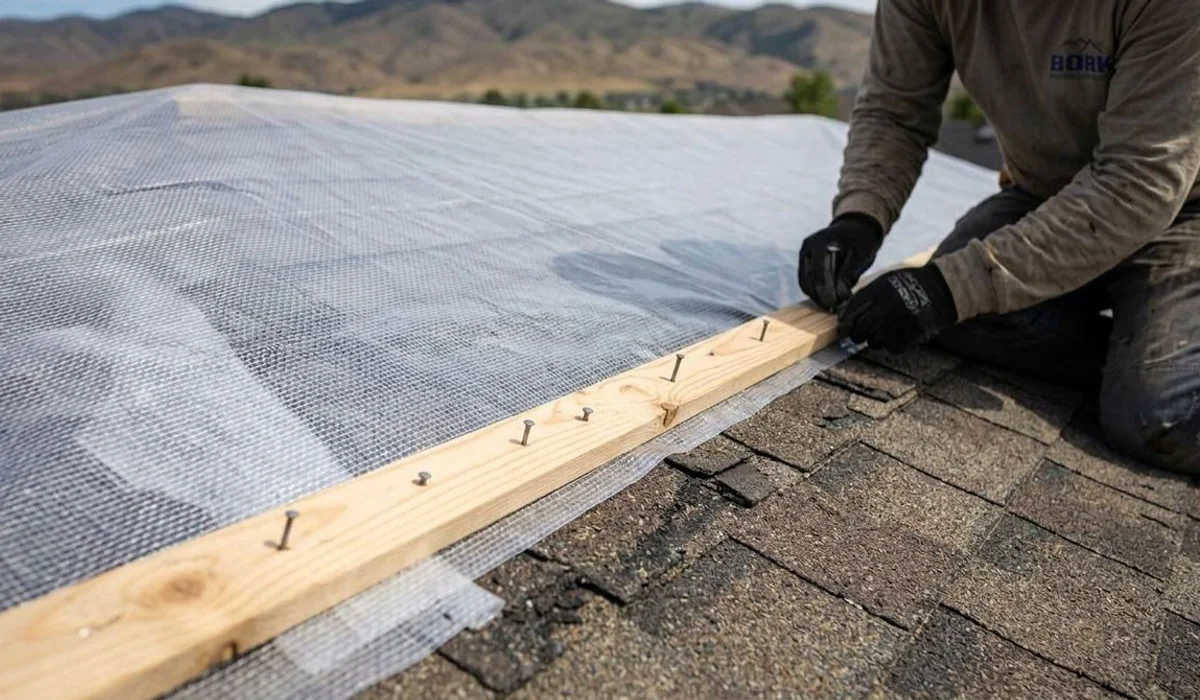
Here are the verifiable specifications for a professional installation:
- 6-mil reinforced polyethylene: This thickness provides industrial-grade puncture resistance.
- UV-stabilized coating: The material resists sun degradation for 30 to 90 days.
- Oversized dimensions: The fabric must extend a minimum of 24 inches past the damage zone.
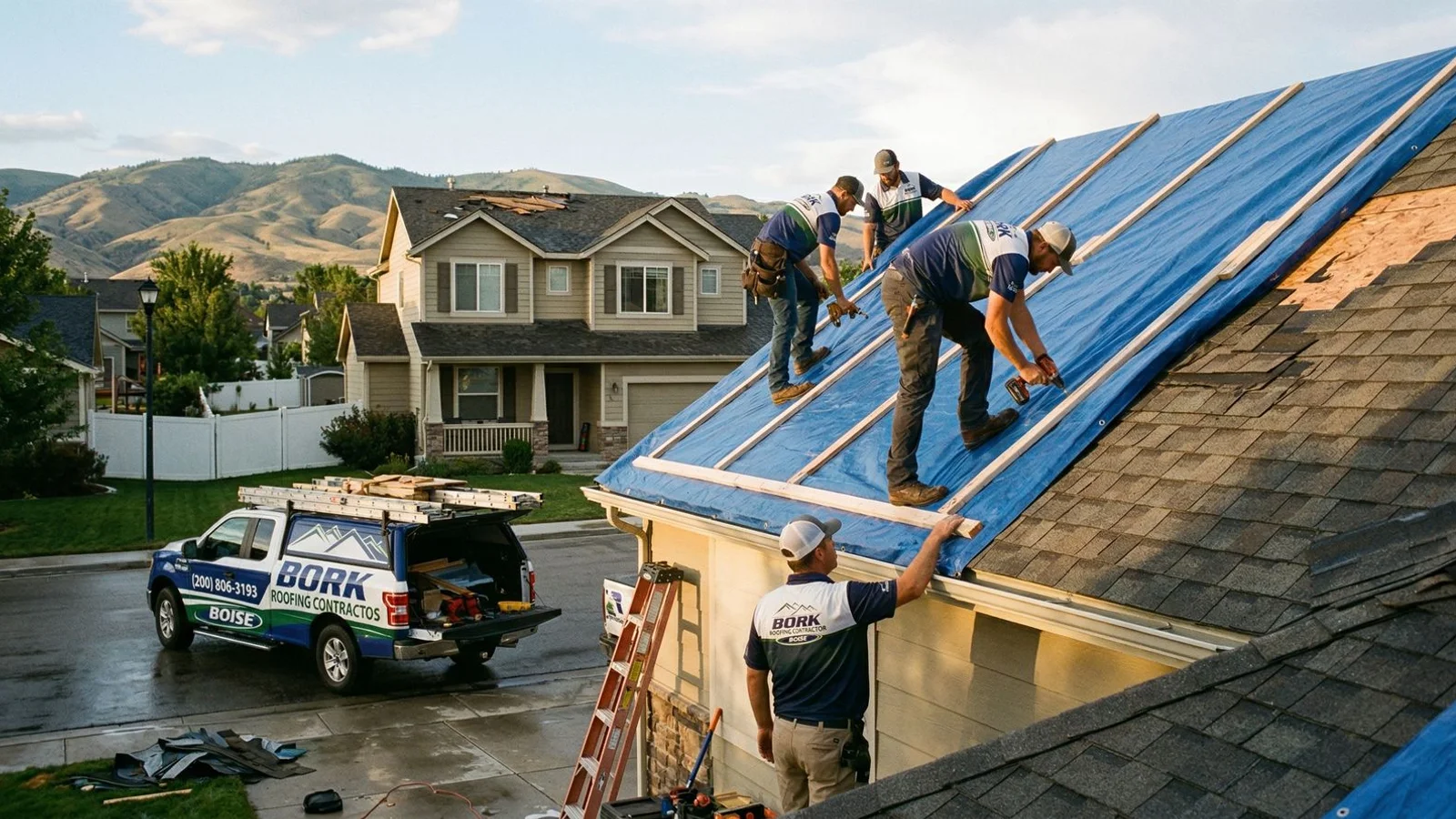
- Wood furring strips: We use 1x2 or 2x2 inch wooden batten strips to mechanically fasten the edges into the roof deck.
- Precise sloping: The installation is pitched so rainwater sheds over the sides, avoiding pooling.
These specific components create a dramatic difference in performance. A fastened system holds firm through the 50 to 65 mph wind gusts commonly recorded by the National Weather Service in Boise. We frequently see these heavy-duty covers perform flawlessly for months. Hardware store sheets often cause more water intrusion than they prevent.
Why DIY Tarps Usually Make Things Worse
We have responded to countless local emergencies where a homeowner’s makeshift solution amplified the destruction. National 2026 roofing data shows that 33% of all full roof replacements stem directly from storm damage. Improperly securing a temporary cover accelerates that structural failure.
Many residents attempt to use bricks or sandbags to hold down the plastic. Wind easily blows the fabric sideways, rolling the heavy objects and lifting the cover entirely within minutes.
Our crews frequently fix these specific DIY mistakes:
- Low hanging edges: The plastic catches rain and funnels moisture underneath the surrounding shingles.
- Ridge-tied orientations: Securing the top at the roof peak while leaving the bottom loose creates a massive wind sail.
- Grommet punctures: Cheap metal grommets tear easily and act as direct entry points for water.
- Nailing through good shingles: Driving fasteners randomly into intact areas creates permanent, unnecessary holes.
Professional applications rely on perimeter fastening rather than unreliable grommets.
Our Same-Day Tarping Process
When a severe storm hits, speed is your primary defense against structural rot. Our emergency dispatch operates 24/7 at (208) 545-8226 to deploy a technician rapidly. The process follows strict safety and documentation protocols to protect your property and your insurance claim.
Initial Assessment and Safety
We start every job with a comprehensive on-site hazard evaluation. The technician checks for compromised structural framing, downed electrical lines, and dangerous wind speeds. Work may be staged differently if the National Weather Service issues an active severe thunderstorm warning for Ada County.
Measurement and Custom Cutting
Accurate sizing prevents the cover from flapping or failing. We measure the exposed area and cut the 6-mil plastic at least two feet wider than the damage in every direction. This overlap guarantees total moisture protection.
Fastening and Tensioning
Our installers position the material over the breach and nail wooden furring strips along the top and sides. The plastic is pulled tight to ensure water flows off the bottom edge smoothly. We strictly avoid driving nails into healthy sections of the roof.
Claims Documentation
The Idaho Department of Insurance strongly recommends documenting damage before permanent repairs begin. We take detailed photographs of the failed decking, the surrounding shingles, and the completed temporary cover. This specific evidence helps your adjuster process the mitigation claim faster.
How Long Does a Tarp Actually Buy You?
A mechanically fastened system built to US Army Corps of Engineers standards provides significant breathing room. Our professional installations reliably protect Boise homes for 30 to 60 days.
This timeframe is critical because the claims process rarely moves quickly during a widespread regional weather event. You need a stable barrier while navigating the logistical hurdles of a major repair.
A 60-day window provides ample time to complete these mandatory steps:
- File the initial property claim with your carrier.
- Wait for the assigned field adjuster to perform an inspection.
- Review the final scope of loss documentation.
- Order matching asphalt shingles or metal panels.
- Secure a spot on a local contractor’s production schedule.
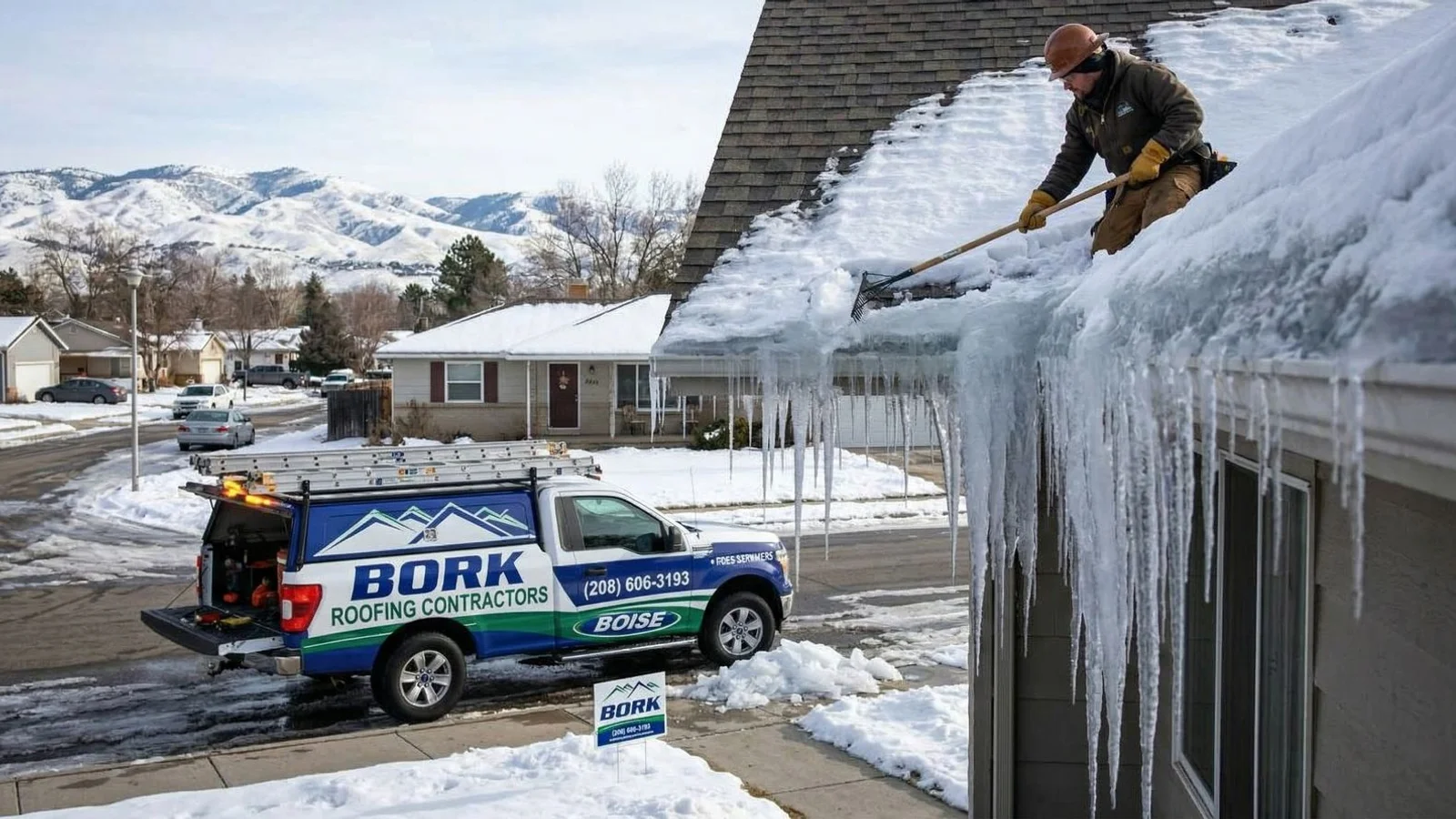
We occasionally refresh the installation if heavy winter snowfall causes an adjuster backlog that extends past the material lifespan.
What It Costs (And Who Pays)
Emergency mitigation is incredibly cost-effective compared to the price of a total roof replacement. Our immediate tarping services generally range from $450 to $900 based on the pitch, height, and square footage of the damage.
The Idaho Department of Insurance notes that standard property policies require policyholders to prevent further damage after a loss. Your carrier considers this temporary covering a necessary mitigation expense.
We find that most major providers reimburse this initial invoice as part of your total settlement. Leaving a hole exposed leads to ruined drywall, soaked insulation, and warped hardwood floors.
Here is a financial comparison highlighting why immediate action makes sense:
| Service Type | Estimated 2026 Cost | Covered by Insurance? |
|---|---|---|
| Emergency Tarp Installation | $450 to $900 | Yes, classified as mitigation |
| Average Boise Roof Replacement | $12,000 to $28,000 | Yes, minus your deductible |
| Secondary Interior Water Damage | $3,000 to $15,000+ | Subject to adjuster review |
Paying a few hundred dollars out of pocket tonight is vastly superior to fighting over thousands in secondary water damage tomorrow.
When to Call
Boise experiences intense freeze-thaw cycles and sudden spring windstorms that exploit any weakness in your roof deck. You must secure the perimeter before the next weather system moves into the valley.
Our dispatchers are standing by at (208) 545-8226 for immediate assistance. Call us the moment you observe any critical failures.
Do not wait until the morning if you experience these specific issues:
- Missing shingles that expose the underlying wood decking.
- Large tree branches resting heavily on the structure.
- Active dripping from your ceiling or water stains on the drywall.
- Documented hail impacts with rain visible on the local radar.
A faster response drastically limits the scope of your interior repairs. We provide reliable protection 24 hours a day, 7 days a week. Reach out immediately to protect your home.