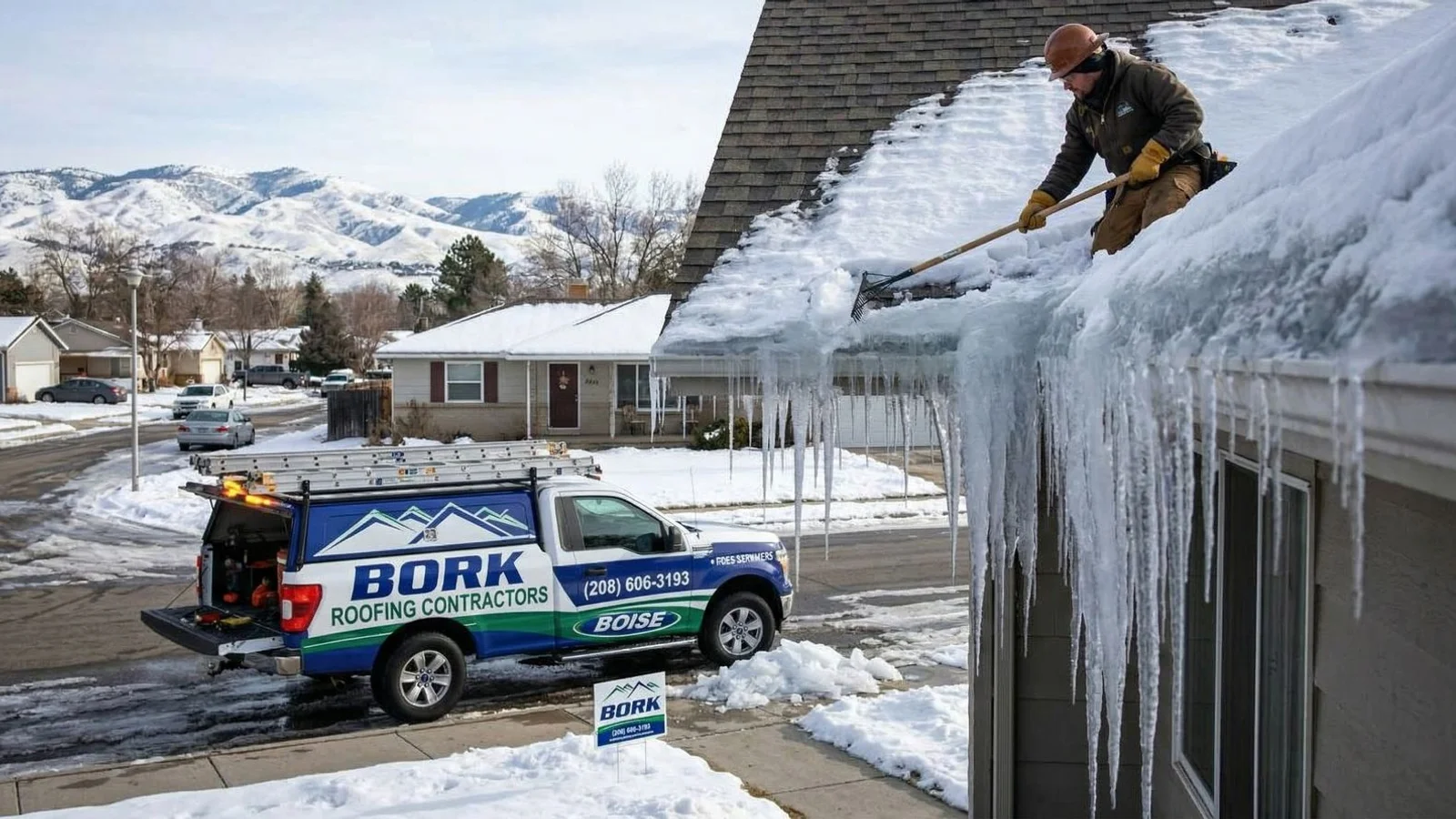
You know how frustrating it is to look up at your house and see massive icicles hanging from the gutters.
If you are wondering how to prevent ice dams on your Boise roof this winter, you are in the right place.
Our 24/7 emergency roof repair team gets dozens of calls about these destructive ice formations every January.
Boise averages about 18 inches of snow annually, putting serious stress on local homes.
Treating the symptom will not cure the disease.
Let’s explore the science behind these frozen blockages and outline the specific steps to stop them for good.
How Ice Dams Actually Form
We see the exact same chain of events on almost every damaged property.
An ice dam requires three things: snow on the roof, a warm spot under the snow, and freezing temperatures at the edge.
Here is the specific sequence of events:
- Snow accumulates on your asphalt shingles.
- Heat rising from your living space warms the upper portion of the roof deck above 32 degrees Fahrenheit.
- The warm deck melts snow from below, sending water down the slope.
- The water reaches the eave, which stays freezing cold because there is no living space beneath it.
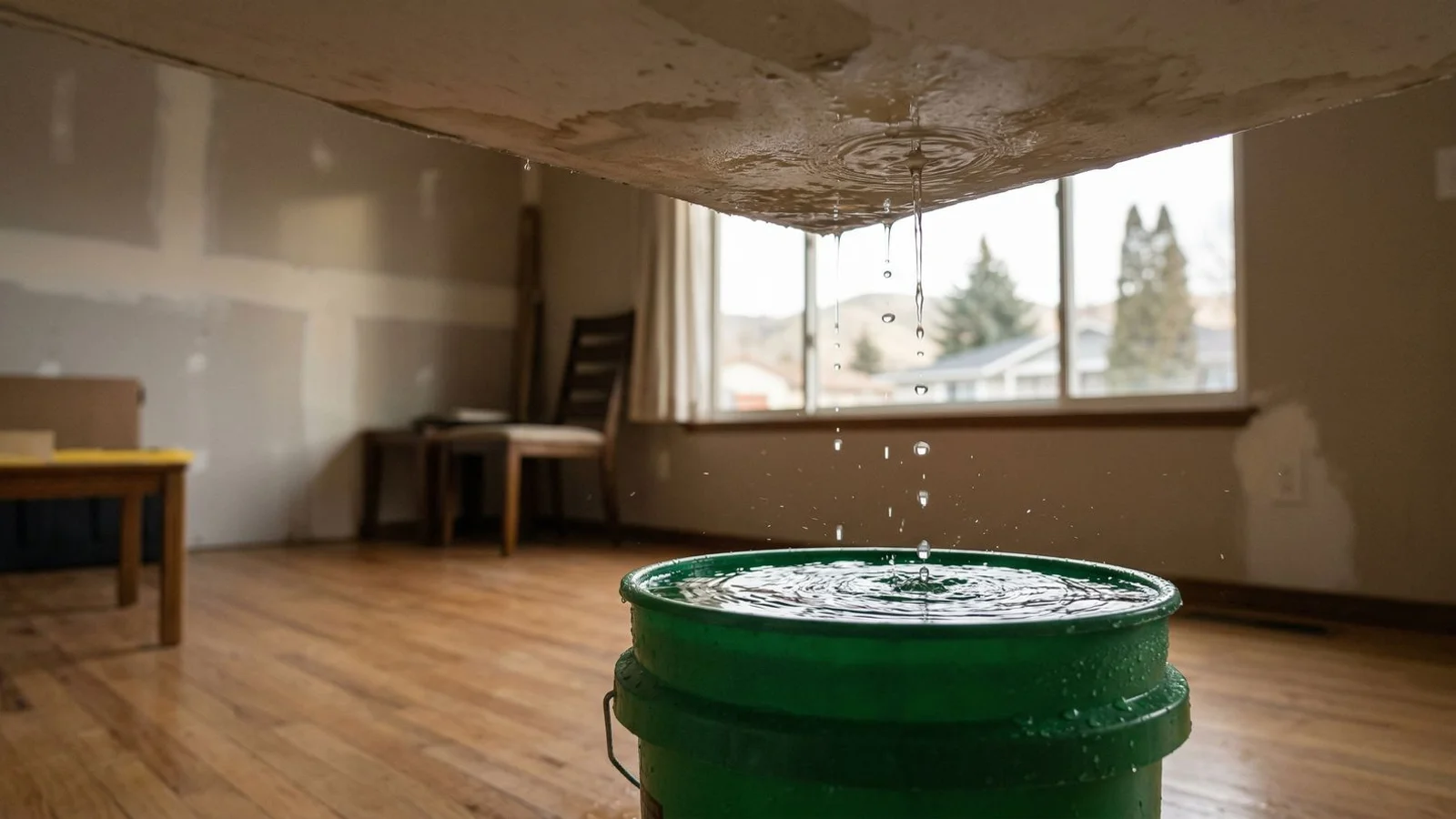
- Melt water refreezes into a solid ridge, backing up under the shingles and leaking into your ceilings.
Many homeowners blame the weather.
Our crews know the real culprit is the uneven temperature between the main roof deck and the eave.
Boise winter temperature inversions only make this cycle worse by trapping freezing air around the base of your home.
Fix that uneven temperature, and these leaks disappear completely.
How to Prevent Ice Dams on Your Boise Roof This Winter: The Three Proven Fixes
Fixing the temperature imbalance requires a multi-step approach.
1. Balanced Attic Ventilation
A properly vented attic stays at the same temperature as the outside air.
Cold decking means no melt water, which guarantees no ice dams.
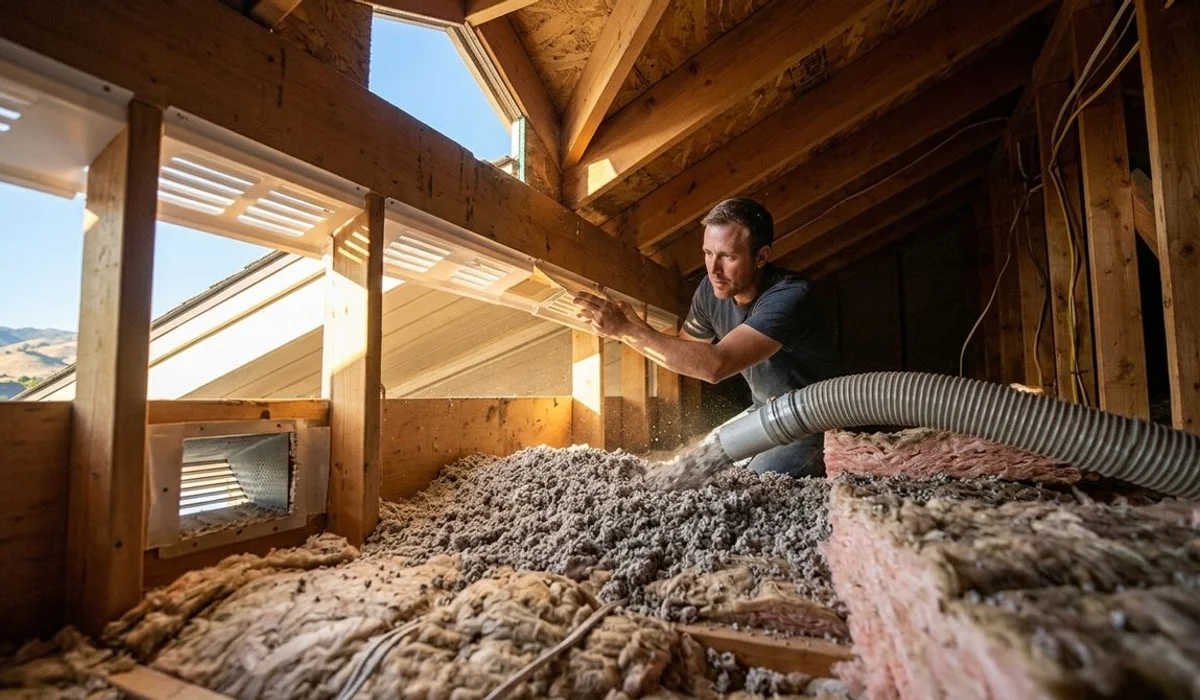
Balanced ventilation requires intake soffit vents and exhaust ridge vents working together to move cold air continuously.
Our inspections reveal that most older Boise homes are severely under-vented.
The industry standard is the 1/300 rule, which dictates one square foot of ventilation for every 300 square feet of attic space.
Adding continuous aluminum soffit vents and a high-quality exhaust system like Lomanco ridge vents is the proven fix.
This upgrade usually runs $600 to $2,000.
You will easily recoup that cost by avoiding just one major ceiling repair.
2. Attic Insulation (R-49 or Better)
Insufficient attic insulation lets your expensive heating escape upward to warm the roof deck.
The Department of Energy classifies Boise in Climate Zone 5, requiring a minimum of R-38 insulation.
Upgrading to R-49 is the recommended standard for total protection.
We frequently find older homes built before 1990 sitting at a dismal R-19 or R-30.
Adding blown-in cellulose or Owens Corning fiberglass to hit R-49 typically costs $1,500 to $4,000 for a 2,000-square-foot house.
Here is a quick breakdown of what those numbers mean for your property:
| Insulation Level | Typical Age of Home | Performance Impact |
|---|---|---|
| R-19 to R-30 | Built before 1990 | High heat loss, high ice dam risk |
| R-38 | Code minimum (Zone 5) | Moderate protection, standard efficiency |
| R-49 | Current recommended standard | Maximum heat retention, lowest ice dam risk |
This investment pays back double by preventing winter leaks and dramatically lowering your monthly utility bills.
3. Ice-and-Water Shield at Eaves
Premium underlayments act as a final line of defense against pooling water.
The International Residential Code in Idaho requires this self-adhered rubberized membrane to extend at least 24 inches past the interior warm wall line.
Many older local roofs were installed before this code existed or have barriers that have completely dried out.
Our installers always apply industry-leading products like Grace Ice & Water Shield to meet or exceed this code minimum.
Going further up the roof slope is a smart move for houses with a known history of severe leaks.
This membrane does not stop the ice from forming, but it creates a watertight seal around roofing nails to keep backed-up moisture outside your living room.
The Short-Term Fix: Calcium Chloride Socks
A quick response is critical if you already have water backing up into your drywall.
Filling standard nylon pantyhose with a calcium chloride ice melt provides an excellent temporary workaround until professional help arrives.
You lay these filled tubes vertically across the frozen ridge to melt drainage channels.
We highly recommend using pure calcium chloride brands like Peladow, or purchasing pre-made KMI Roofmelt pucks from a local hardware store.
The chemical reaction generates heat that cuts through the blockage, allowing trapped water to drain safely into the gutter.
Avoid these common mistakes to protect your property:
- Do NOT use rock salt: Standard sodium chloride rapidly corrodes aluminum gutters and destroys asphalt shingles.
- Do NOT chip at the ice with an ax or hammer: Physical force will shatter cold, brittle shingles and void your warranty.
- Do NOT climb on an icy roof yourself: The risk of a fatal fall is extremely high.
What Doesn’t Work
We see a lot of gimmicks marketed to stressed property owners.
These supposed quick fixes often cause more harm than good.
- Heat cables: Typical constant-wattage heat tape burns 5 to 9 watts of electricity per foot every hour. Running 100 feet of this cable 24/7 adds roughly $40 to $75 to your monthly utility bill without fixing the underlying heat loss. Boise heavy winters routinely overwhelm them.
- Shoveling the roof: Scraping off the snow removes the protective granules from your asphalt shingles. You risk serious injury and guarantee premature wear on the materials while failing to address the actual heat loss.
- Roof edge melters: These heated metal panels suffer from the exact same severe limitations and high electrical costs as standard heating cables.
When to Call Us
If you are dealing with active interior leaks or water-stained drywall right now, call (208) 545-8226 immediately.
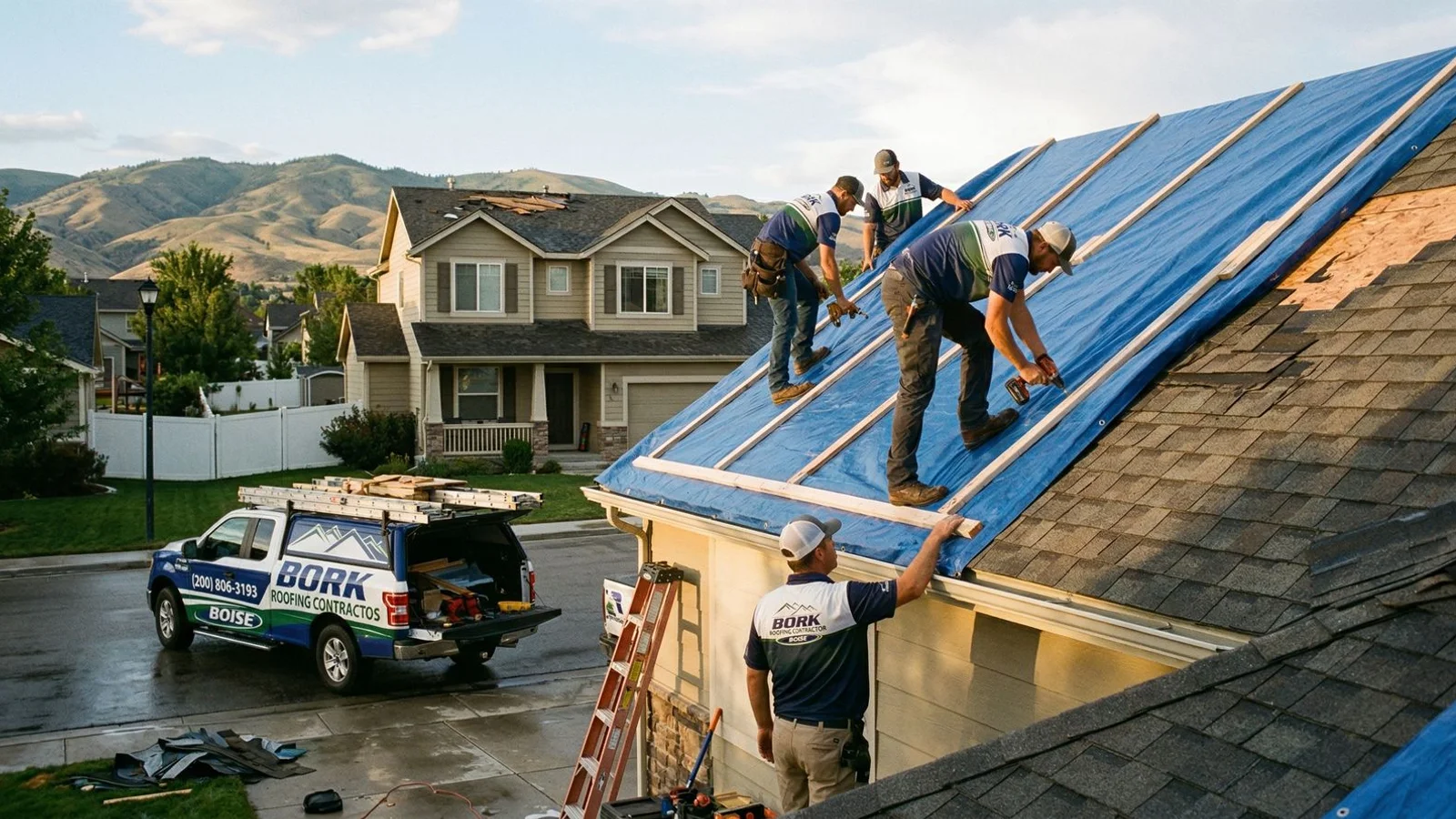
Our crews will safely tarp the area, document the damage for your insurance, and begin the permanent fix once the weather clears.
You can save thousands of dollars in restoration costs by scheduling a preventative fall inspection before the first major snowstorm.
Knowing how to prevent ice dams on your Boise roof this winter is the best way to protect your investment.
Boise weather is relentless, but your property does not have to be vulnerable.