We regularly evaluate properties after intense weather rolls through the Treasure Valley. Early detection acts as the dividing line between a quick claim approval and an outright denial.
Our initial inspections frequently reveal hidden impact fractures that untrained eyes completely miss.
You need verifiable proof to compel the insurance carrier to cover your storm damage restoration costs. We will outline the exact visual indicators of shingle failure and discuss specific data points from recent Idaho storms.
Learning how to identify hail damage on your Boise roof (with photos) ensures you secure the funds necessary for a proper replacement.
What Hail Damage Actually Looks Like
Our crews examine thousands of damaged roofing systems across Idaho every year. According to the National Storm Damage Center, falling ice causes an estimated $1 billion in property damage across the country annually.
We know exactly what these destructive impacts do to standard residential materials. A 1-inch hailstone falling at high speeds creates a concentrated compression point on your asphalt shingles.
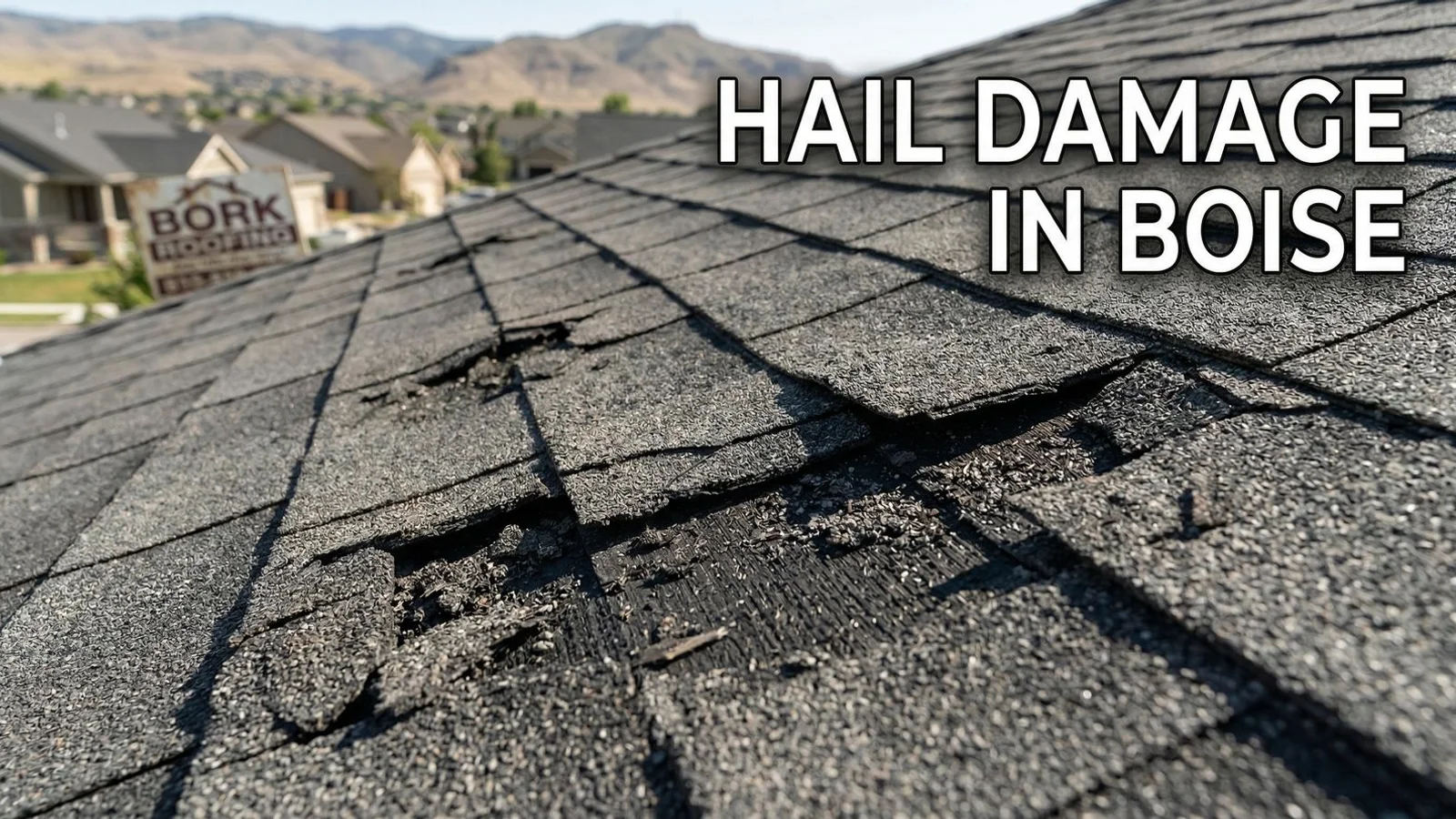
Our roofers refer to this specific issue as asphalt shingle bruising. Fresh bruises look dark against the exposed black mat and feel distinctly soft to the touch.
We frequently see the underlying fiberglass mat shatter beneath the top granular layer even when the surface appears intact. This phenomenon causes latent granule loss, meaning the protective sand washes away during the next heavy rain. Old bruises oxidize over several weeks and become significantly harder to distinguish from normal wear.
The Scientific Anatomy of a Strike
We document four primary visual patterns during a thorough post-storm assessment. Understanding these variations helps you communicate clearly with an adjuster.
- Circular patterns of granule displacement on the main shingle face.
- Soft spots where the structural mat sustained a bruise but avoided cracking open.
- Broken shingle tabs where violent impacts caused the actual material to split.
- Exposed fiberglass matting showing through the protective granules.
The 5 Ground-Level Signs
Our team understands that most homeowners cannot safely climb a steep pitch to investigate. You can safely check for collateral storm indicators from the ground to build a compelling case.
We recommend inspecting the perimeter of your house immediately after any severe weather event. Finding these specific clues means you experienced a strike large enough to ruin your roofing system.
1. Dents in Soft Metal
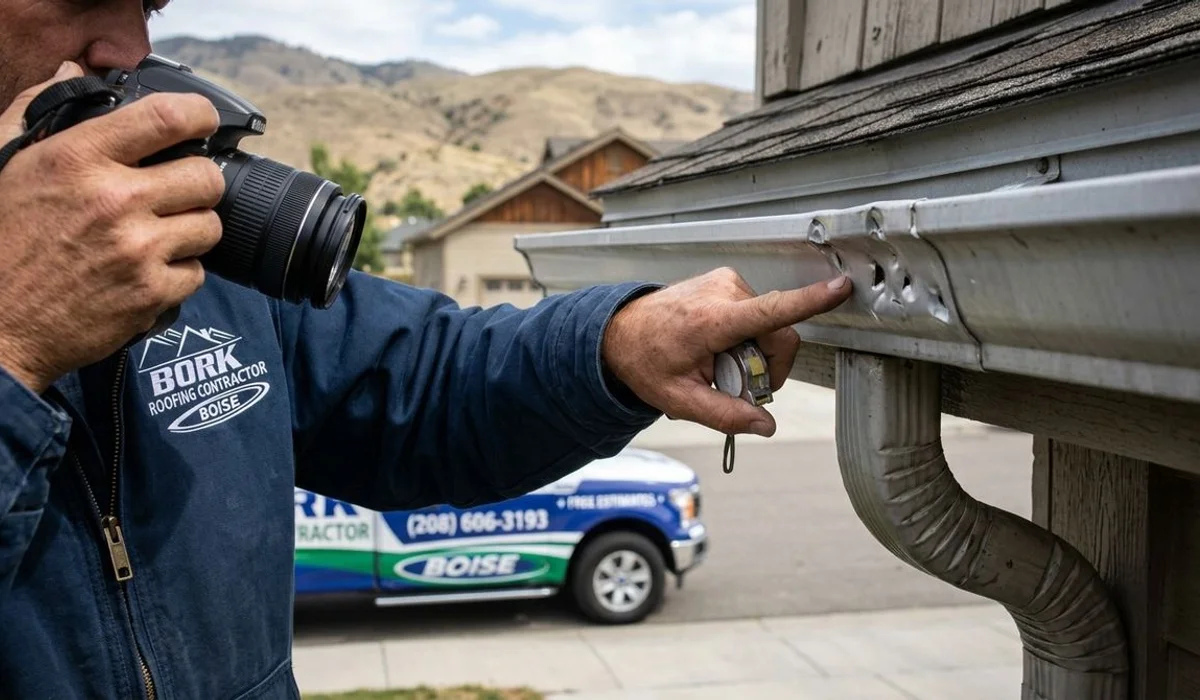
Our specialists always check aluminum gutters, downspouts, roof vents, and air conditioner condenser fins first. Standard residential aluminum gutters measure between 0.019 and 0.027 inches thick, making them highly susceptible to denting. Circular impressions in these soft metals confirm that a severe weather event impacted your property.
2. Damaged Window Screens
We look for punctures or distinct tears in standard fiberglass and aluminum window mesh. These tears serve as strong corroborating evidence for insurance claims.
3. Splattering on Painted Surfaces
Our inspectors find that fresh strikes on wood fences or painted siding leave clear circular marks. The impact disturbs or removes the oxidized layer of paint to reveal a brighter color underneath.
4. Granule Piles at Downspout Bases
We frequently discover large piles of shingle sand washing out of downspouts after a severe cell passes. Significant accumulation indicates that the top layer of your asphalt shingles shed en masse due to substrate fracturing.
5. Damaged Vegetation
Our grounds review includes checking hostas, large-leaf plants, and small branches around the foundation. Stripped leaves and severely broken flowerbeds indicate an event significant enough to warrant a full structural inspection.
What Hail Damage Doesn’t Look Like
We often encounter property owners who mistakenly blame standard wear and tear on recent weather. Adjusters quickly deny claims when they spot pre-existing issues disguised as sudden and accidental losses.
Our trained professionals know how to instantly distinguish real impact marks from these common lookalikes. You will save time and frustration by recognizing these non-qualifying conditions.
Common Misidentifications
We compiled this specific list of issues that insurance carriers will outright reject during a claim review. Proper identification prevents you from filing a frivolous claim.
| Condition | Appearance | Actual Cause |
|---|---|---|
| Blistering | Small bubbles popping on the surface | Manufacturing defects or poor attic ventilation |
| Edge Wear | Granule loss specifically at the shingle edges | Normal aging and weather exposure over many years |
| Dark Streaks | Black staining running down the pitch | Gloeocapsa magma (a common airborne algae) |
| Curling | Shingle corners lifting upward | End-of-life material degradation |
Our experts can accurately categorize these defects within seconds of stepping onto the decking. Knowing the difference protects your claims history from unnecessary blemishes.
When to Call for a Free Inspection
We strongly advise acting quickly if you suspect any structural compromises. Recent 2025 data from This Old House shows that a typical Idaho roof replacement averages $7,947, making undetected leaks an incredibly expensive oversight.
Our experience shows that waiting too long gives the insurance carrier an easy excuse for denial. Protect your financial interests by scheduling an evaluation under these specific circumstances.
Key Triggers for Professional Help
We recommend calling for backup if any of the following scenarios apply to your property. Delaying the process only increases your risk of interior water intrusion.
- A recent storm hit your neighborhood. Severe weather reports confirmed large impacts around Ada County in July 2025, and many carriers strictly enforce a 365-day filing window from the exact date of loss.
- You spot ground-level indicators. Discovering any of the five warning signs listed above justifies bringing out a qualified contractor.
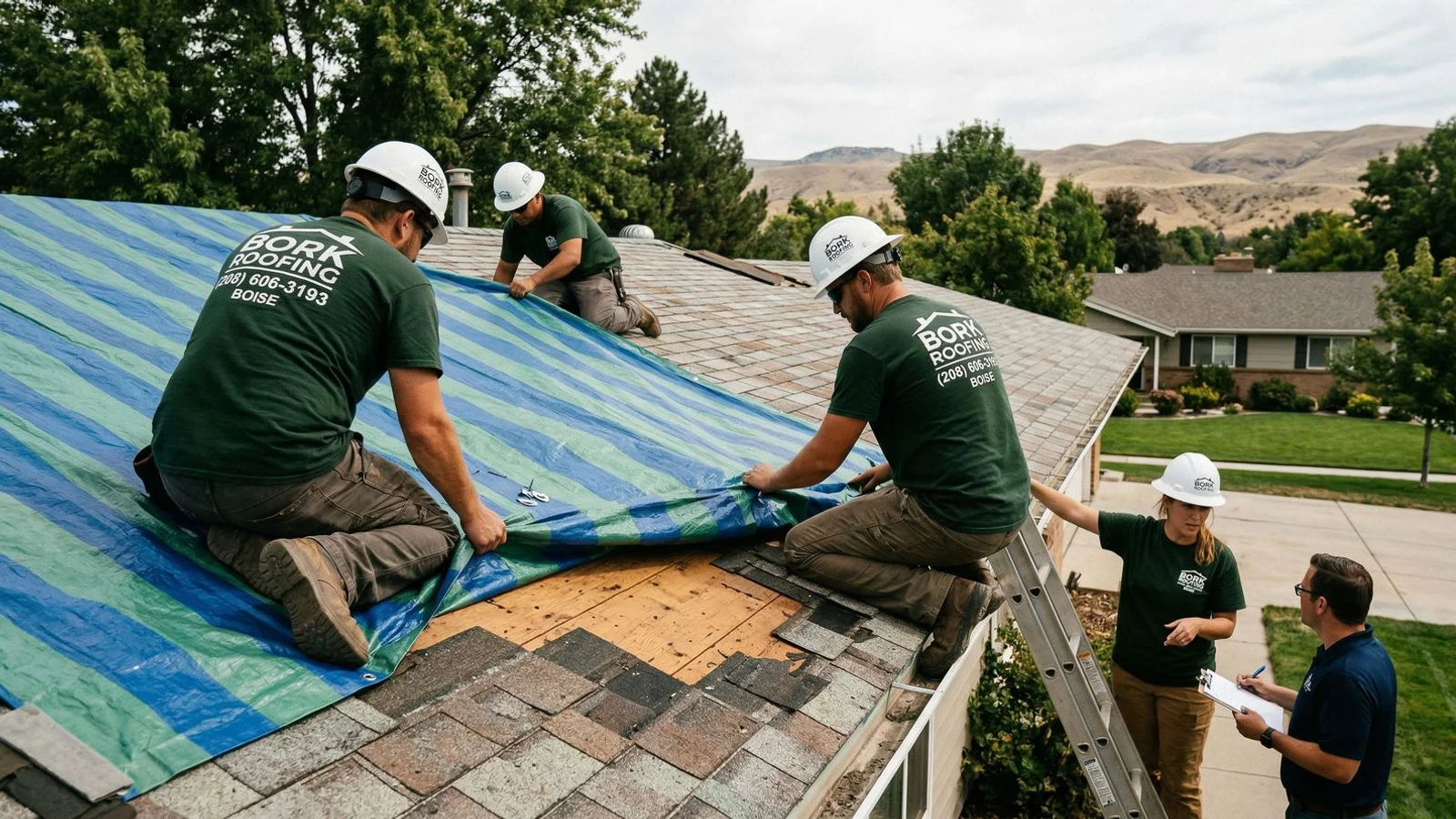
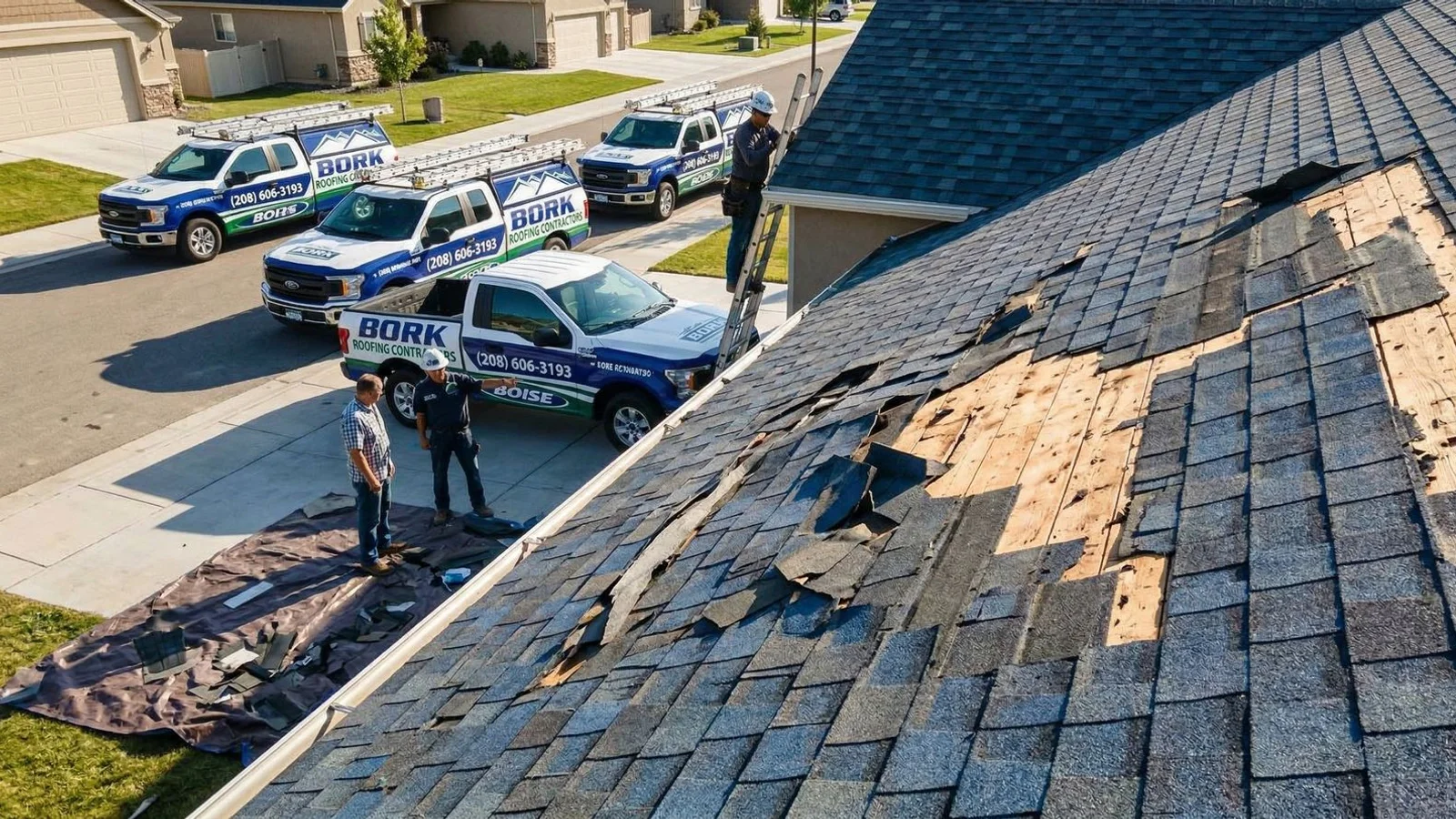
- Neighbors are getting replacements. Seeing a contractor crew next door means your property likely sustained the exact same wind and ice forces.
- An adjuster denied your initial request. Securing a second opinion from a licensed expert often reveals hidden fractures that a rushed adjuster missed entirely.
Our Free Hail Inspection
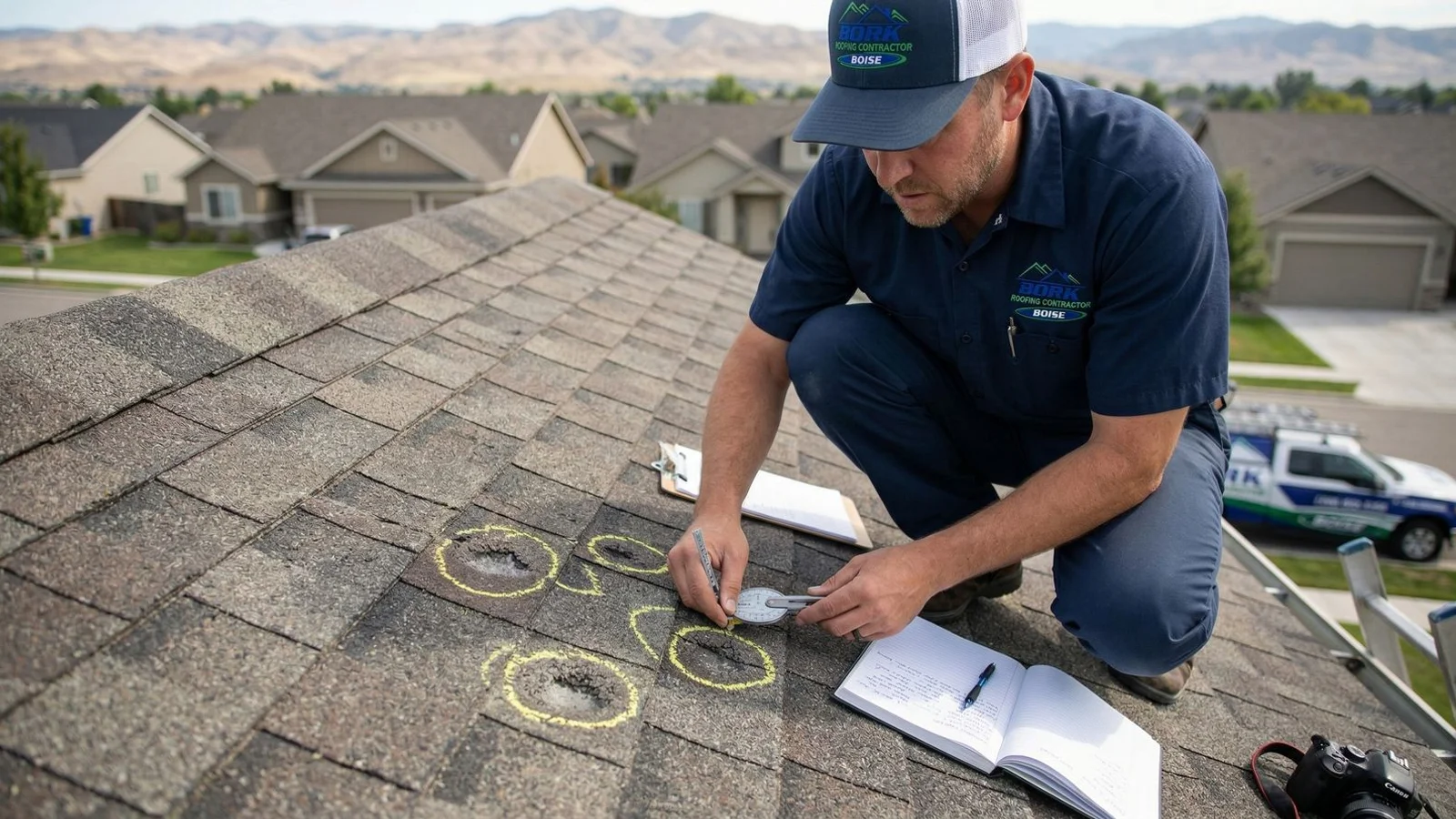
We provide entirely free, no-obligation evaluations following any major weather event. Bork Roofing utilizes the industry-standard 10x10 foot test square method to perform precise chalk-mark documentation for the adjuster.
Our crews supply rigorous photo evidence and highly detailed written reports that specifically highlight sudden and accidental losses. This level of specific proof drastically improves your chances of a fair settlement.
Complete Claims Support
We will gladly help you file the initial paperwork and coordinate directly with your assigned adjuster if we find real damage. You owe us absolutely nothing if we inspect the property and find no legitimate issues to report.
Our service area covers every Boise neighborhood plus Meridian, Nampa, Eagle, Caldwell, Star, Kuna, and Garden City. Taking immediate action is the smartest way to protect your largest financial asset.
Conclusion
We know that dealing with insurance adjusters feels overwhelming after a severe storm. Having undeniable proof changes the entire dynamic of that conversation.
Our team is ready to provide the exact documentation you need to restore your property safely. Applying this guide on how to identify hail damage on your Boise roof (with photos) is your first step toward a secure, weather-tight home.
Call (208) 545-8226 today to claim your free, no-obligation inspection.