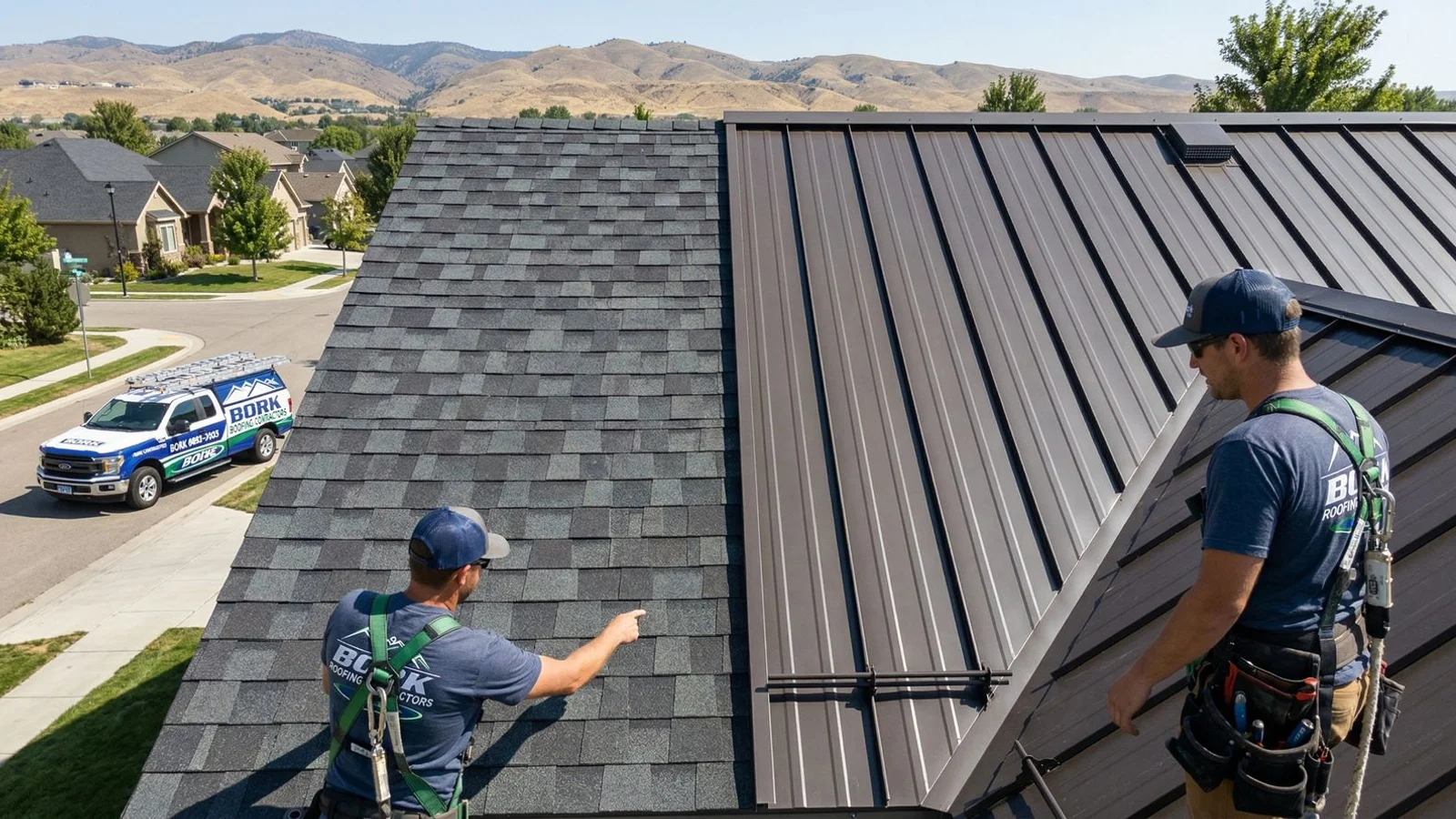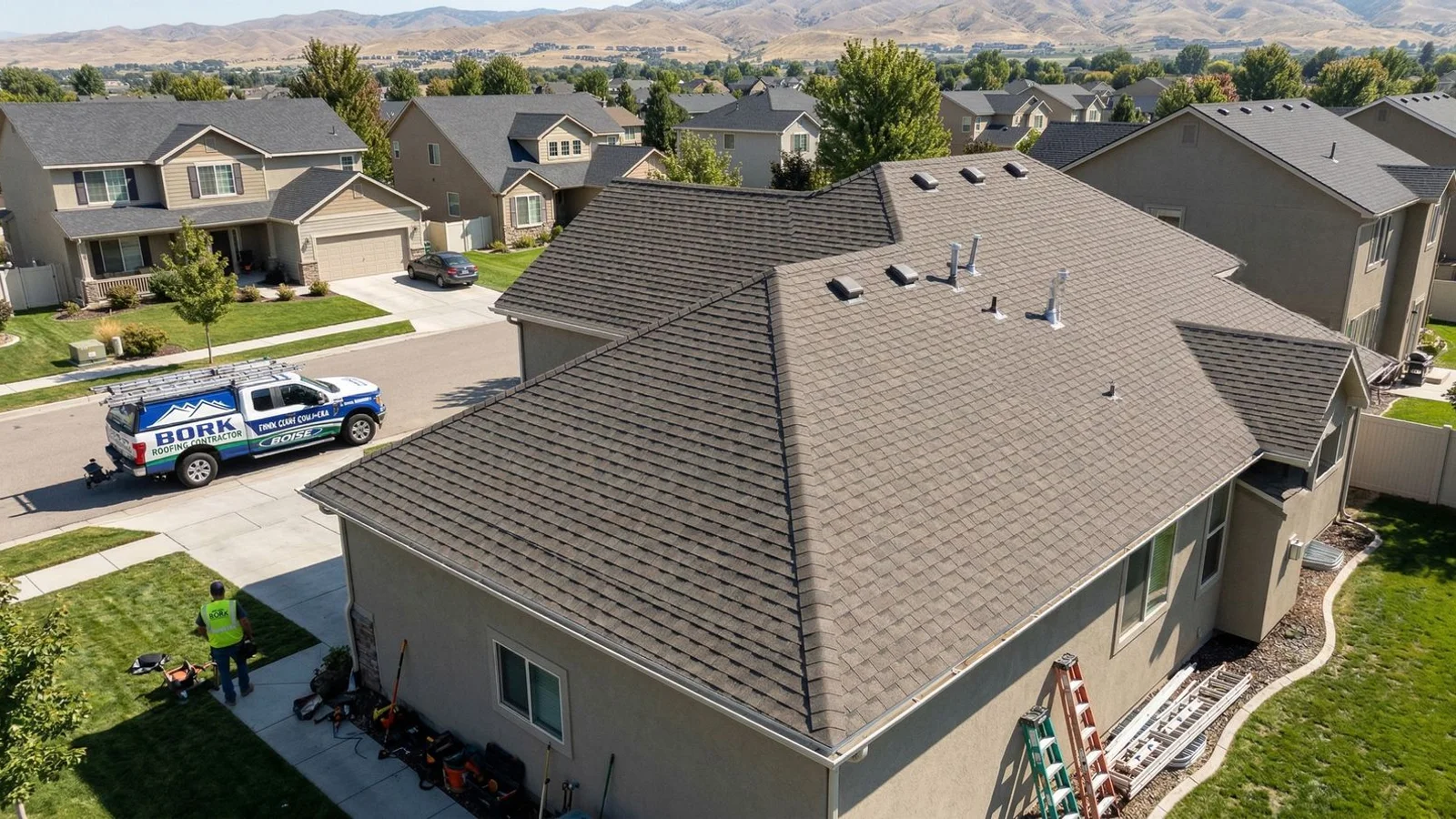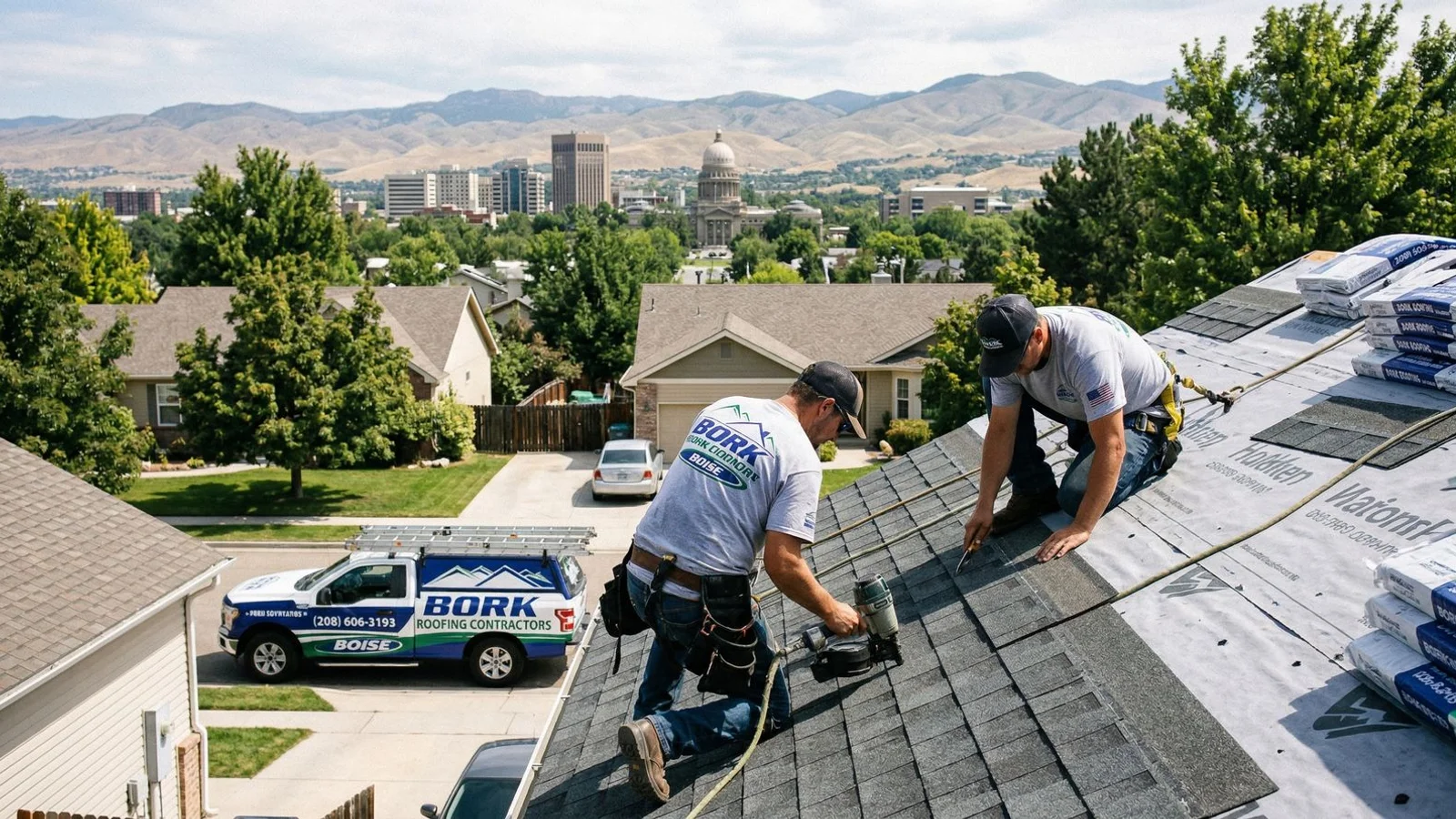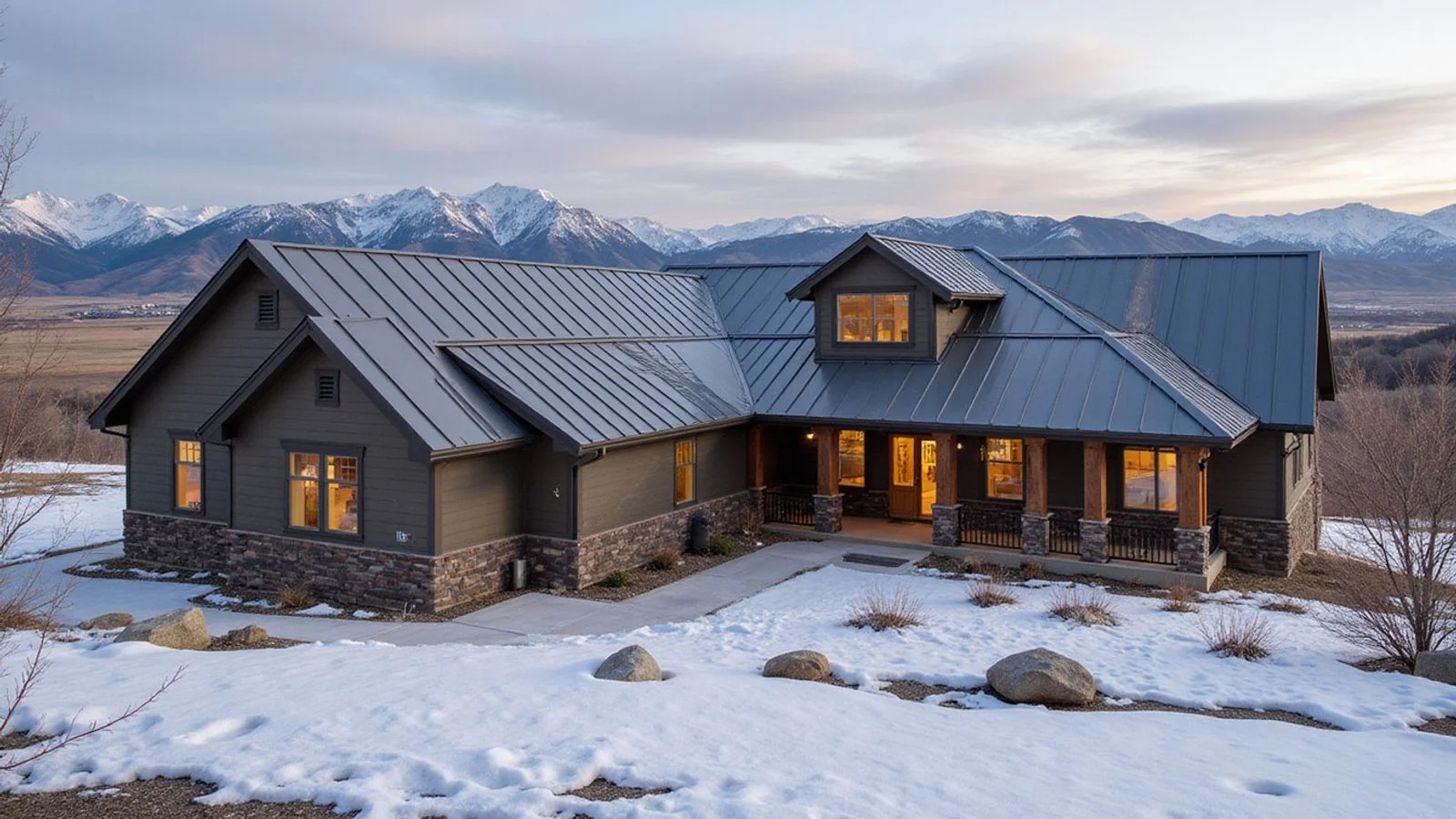
We hear the same question from almost every property owner seeking their first roof replacement estimate. The inquiry is always about the upfront price tag. Is Metal Roofing Worth It in Boise? A 20-Year Cost Breakdown is the exact conversation our team has daily.
Our experience shows that the initial sticker shock often hides the true long-term value. This material costs double what standard shingles run right now. From what we have seen, the dividing line between a good decision and a bad one depends entirely on how long you plan to stay in the building.
Let us look at the hard data and explore a few practical ways to respond.
Is Metal Roofing Worth It in Boise? A 20-Year Cost Breakdown and Comparison
We price hundreds of projects every year, and the 2026 numbers show a clear divide between materials. A standard 2,000-square-foot Boise home with simple geometry provides a perfect baseline for this analysis. Our current estimates reflect the rising costs of traditional asphalt products across the United States. The figures below highlight the dramatic differences in initial investment.
| Roofing Material | 2026 Estimated Cost | Expected Lifespan |
|---|---|---|
| Architectural asphalt (GAF Timberline HDZ) | $12,000 to $14,500 | 20 to 25 years |
| Class 4 impact-resistant asphalt | $15,000 to $17,500 | 25 to 30 years |
| Stone-coated steel | $18,000 to $24,000 | 40 to 50 years |
| 24-gauge standing seam metal | $22,000 to $30,000 | 50+ years |
At first glance, the heavy-duty metal options look like an absolute luxury. Homeowners and business owners often hesitate when they see that $26,000 average price tag for standing seam. Our professional service team completely understands that initial hesitation. You have to look at what each material costs per year of its expected life to see the full picture.
The 20-Year Lifecycle Math
Our typical architectural asphalt roof in Boise lasts 20 to 25 years before needing a full replacement. Southern exposures face intense ultraviolet degradation, which causes standard shingles to dry out and fail much faster. We often see these sun-baked slopes requiring replacement closer to the 15-year mark. A properly installed standing seam metal roof lasts 40 to 60 years.
Let us break down the actual cost per year using conservative 2026 averages.
| Material Type | Total Upfront Cost | Expected Lifespan | Cost Per Year |
|---|---|---|---|
| Standard Asphalt | $13,000 | 22 years | $591 |
| Standing Seam Metal | $26,000 | 50 years | $520 |
The numbers reveal that metal is actually cheaper per year in the long run. This calculation does not even factor in the energy savings or the increased resale value of the property. Our group recommends looking at this as a long-term investment rather than a quick flip. Smart property owners plan for the future.
Energy Efficiency and Insurance Savings
We love discussing the hidden financial benefits that kick in after the installation is finished. Boise summers routinely hit 95 degrees, turning dark asphalt shingles into massive heat sinks. Our local climate demands materials that actively fight solar heat gain. According to a 2026 study highlighted by the U.S. Department of Energy, metal roofs reflect 40% to 70% of solar heat. Standard dark asphalt shingles only reflect about 5% to 25% of that same solar radiation.
Here is how these modern materials impact your monthly expenses:
- High Solar Reflectance: Metal reflects up to 70% of solar radiation.
- Rapid Heat Dissipation: The low thermal mass allows the surface to cool instantly after sunset.
- Reduced Cooling Loads: Expect your air conditioning demands to drop by up to 20% during July and August.
Our clients also frequently report significant reductions in their annual insurance premiums. Major carriers like State Farm and Progressive offer specific discounts for installing Class 4 impact-resistant roofing. Properties in Idaho can often secure a 10% to 30% discount on their dwelling coverage just for upgrading to this tough material.
Where Metal Really Shines in Boise
Certain geographic zones and architectural styles in Ada County make this material an absolute necessity. Our installers see the greatest return on investment in a few specific scenarios. Here are the top places where this material excels.
Steep Foothills Lots and Snow Shedding
We install many systems in the higher elevations where winter weather creates unique structural challenges. Snow sheds naturally off the slick vertical panels instead of accumulating. Traditional asphalt lets heavy snow build up, which frequently leads to destructive ice dams in the gutters.
The Wildland-Urban Interface Design
Our community is increasingly aware of the wildfire risks in the Foothills and Hidden Springs areas. The City of Boise enforces strict Wildland-Urban Interface building codes to protect vulnerable properties. Meeting these safety standards requires specific material choices:
- Class A Fire Rating: The roof assembly must resist severe fire exposure.
- Non-Combustible Materials: The surface cannot ignite from flying embers.
- Ember-Resistant Detailing: Vents and eaves must block sparks from entering the attic.
We know that standing seam panels exceed all these requirements naturally. This peace of mind is priceless during dry summers.
Long-Term Ownership and Modern Architecture
Our advice is simple for anyone planning to stay in their building for 15 years or more. The lifecycle math only works if you are the person who gets to enjoy the decades of maintenance-free living. Modern contemporary homes in Eagle and Harris Ranch also benefit from the clean vertical lines of standing seam panels.
When to Stick with Traditional Asphalt
Our honesty is the foundation of our business, and we will be the first to tell you when a premium upgrade is a bad idea. There are several situations where standard shingles remain the smartest choice.
Strict Association Restrictions
We regularly encounter Homeowner Associations that simply prohibit anything other than traditional architectural shingles. Neighborhoods like the Millcreek Subdivision often have strict architectural control committees that heavily regulate exterior aesthetics. You must always check your local bylaws before signing a contract for a premium upgrade.
Short-Term Stays and Budget Limits
Our estimators know that if you plan to sell the property in three years, standard asphalt is undeniably the smarter financial play. Cash-tight situations also make the $13,000 asphalt option a perfectly acceptable and safe choice for this season.
We will never push a $26,000 project on someone who just needs a secure, watertight home right now. Your financial comfort is more important than an aesthetic upgrade.
The Persistent Noise Myth
We constantly address the fear that rain will sound like a snare drum during a spring storm.
Modern installations over solid decking with high-quality underlayment are not meaningfully louder than standard shingles.
This concern still stops some buyers, but proper attic insulation eliminates the issue entirely.
Our Recommendation
Our goal is always to equip property owners with the hard facts they need to make confident choices. For most folks needing a quick, affordable fix, architectural asphalt remains the best standard value. Is Metal Roofing Worth It in Boise? A 20-Year Cost Breakdown proves that it absolutely is for those with Foothills lots or long-term plans.
We invite you to reach out for a side-by-side estimate of both materials. Call (208) 545-8226 to schedule a conversation with no pressure and no sales pitch.