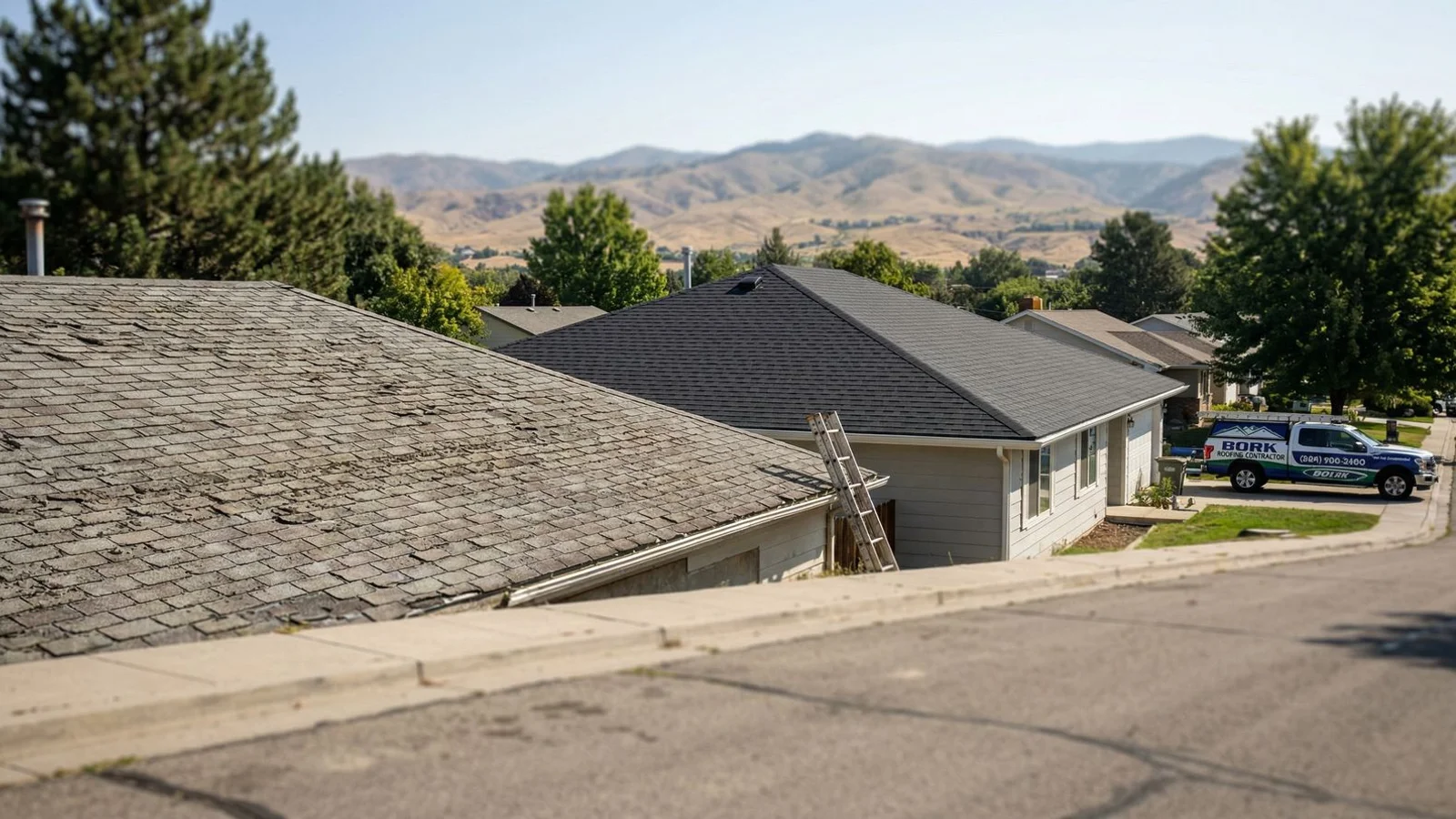
Every property owner eventually faces the difficult choice between a targeted roof repair and a full structural overhaul. We know that asking, “Repair or Replace? How to Decide What Your Boise Roof Really Needs,” is the first step toward protecting your investment.
The decision boils down to simple math and material science.
You need clear guidelines to evaluate the situation objectively. Our professional service team is going to break down the five main variables you need to check and outline the exact framework used to make the right financial call.
Question 1: How Old Is the Roof?
Age is the single biggest variable in your decision. We use a specific timeline to evaluate residential and commercial structures. Recent 2026 analysis from Vantage Point Inspections shows that Idaho’s intense summer UV exposure and winter freeze-thaw cycles cause materials to dry out and become brittle faster than national averages suggest.
Lifespan and Decision Timeline
| Age Category | General Recommendation | Material Context |
|---|---|---|
| Under 10 years | Repair almost always wins. | You are still well within the warranty period and the underlying materials are healthy. |
| 10 to 15 years | Repair is usually the right call. | Fixes make sense unless the damage is extensive. |
| 15 to 20 years | The gray zone. | Depends heavily on the damage scope and material quality. |
| 20+ years | Replacement usually makes more financial sense. | Applies even if a repair is technically possible. |
This weather reality means a roof that might last 30 years elsewhere could show serious wear much sooner here. Commercial property owners face a slightly different timeline. Our data aligns with 2025 reports from All County Roofing, showing that TPO and EPDM flat roofs generally last 20 to 30 years under proper maintenance. You will want to start planning for a full commercial replacement around year 18 to avoid sudden leaks that damage inventory.
Identifying the exact installation date is not always easy. We can estimate the age within a couple of years through a visual inspection if you do not have the closing paperwork.
Question 2: How Much of the Roof Is Damaged?
A leak under one chimney is usually a straightforward repair. We look at the total percentage of the affected surface area to determine the next steps. Scattered damage across an entire slope indicates a completely different problem.
- Less than 30 percent affected: Repair.
- 30 to 50 percent affected: Major restoration. You will want to get replacement estimates for comparison.
- More than 50 percent affected: Replace.
The term affected means actively damaged rather than simply old. Current 2026 pricing data from local contractors like Signature Roofing shows that most Boise roof replacements cost between $12,000 and $28,000, while standard repairs average $350 to $850. Our experts use these figures to weigh the scale of the damage against the financial impact.
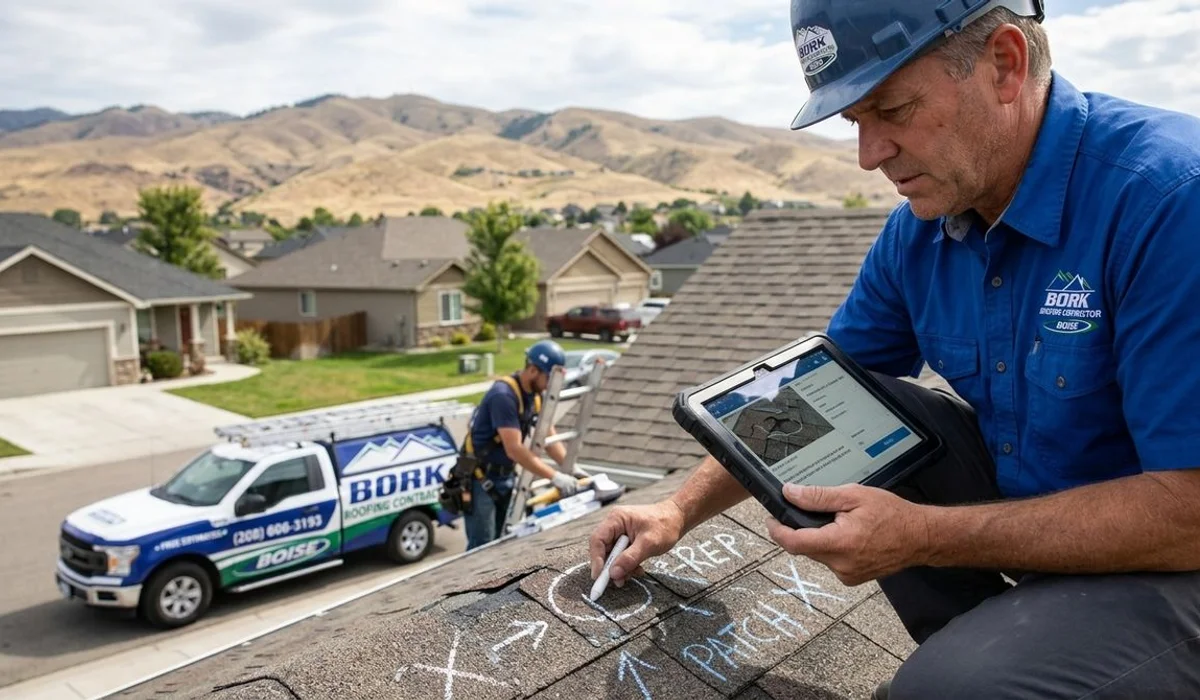
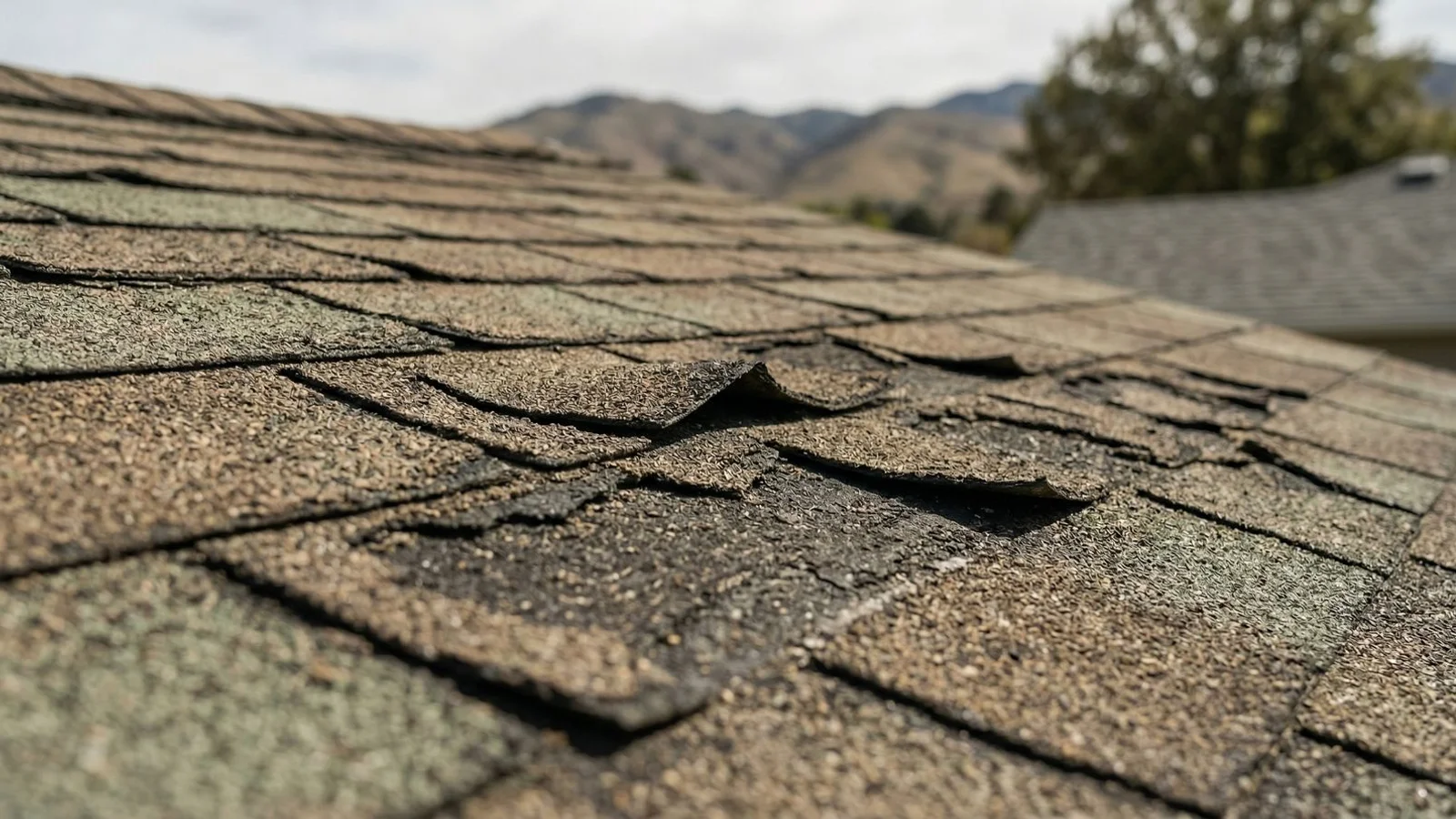
Treasure Valley climate studies from Hawaiian Built Roofing highlight that heavy winter snow loads and freeze-thaw cycles in Idaho often worsen these conditions by forcing moisture under the shingles. We consider a roof with old but functional shingles and a single damaged area as a solid candidate for a repair. Systemic issues like widespread granule loss, curling, and brittleness indicate the materials are near the end of their life.
Question 3: What’s the Cost-Per-Year Difference?
Calculating the annual cost of your options provides massive clarity. We recommend a simple mathematical formula to make this decision completely objective. If an $850 repair gets you five more years of protection, that breaks down to $170 per year.
| Repair Scenario | Annual Cost Breakdown | Financial Outcome |
|---|---|---|
| $850 fix for 5 years | $170 per year | Short-term savings but likely needs repeating. |
| $16,000 new roof for 20 years | $800 per year | Higher upfront cost with guaranteed long-term peace of mind. |
| $2,500 fix for 10 years | $250 per year | The smartest financial move if the structure is sound. |
A $16,000 replacement that lasts 20 years equals $800 per year upfront. Our clients often choose the replacement in similar scenarios because they are buying peace of mind and a fresh warranty. Conversely, spending $2,500 on a repair that secures ten more years of life costs only $250 per year.
The 15 Percent Rule for Businesses
Business owners need to factor in commercial return on investment. We use the industry standard 15 percent rule, highlighted in 2025 commercial roofing reports by Cole Roofing, to evaluate flat roofing systems. If your total repair costs stay below 15 percent of the total replacement cost, fixing the localized damage yields a better return. Frequent repairs that exceed this threshold indicate that a full replacement will save your company money in the long run.
Question 4: Are There Underlying Problems?
Surface damage only tells part of the story. We frequently discover that visible water stains actually stem from rotted decking, a failed ice-and-water shield, or chronic moisture. Recent climate impact analysis by Hawaiian Built Roofing shows that poor attic ventilation traps heat during Boise summers, which bakes the shingles from the inside out.
Hidden Structural Threats
Inadequate airflow also creates severe ice dams during the winter months. Our inspectors will tell you honestly if spot repairs are simply throwing good money after bad. Installing new materials over rotten wood completely voids manufacturer warranties.
The True Cost of Decking
Current 2026 market data from Signature Roofing shows that replacing damaged plywood decking in Boise costs between $45 and $75 per sheet. We must resolve these underlying structural defects before adding any new surface layers. Ignoring soft spots or failing ventilation systems guarantees that your new shingles will fail prematurely.
Question 5: Are You Planning to Sell?
Your real estate timeline dictates your best financial move. We advise clients selling within two years to focus on necessary repairs. According to 2026 inspections data from Vantage Point Inspections, Idaho homebuyers know that local weather limits an asphalt roof’s effective lifespan to 15 to 25 years.
“Buyers will negotiate hard on any structure older than 15 years, so spending $14,000 on a full replacement rarely pays back at closing.”
You should replace a damaged roof that is over 15 years old to avoid constant emergency fixes. Our guidance shifts entirely if you plan to stay in the building for five or more years. This upgrade lets you enjoy the comfort of a reliable home and eventually sell the property with a fresh, highly valued asset.
Insurance Impacts for Commercial Owners
Commercial building owners must also consider insurance implications. We remind business clients that commercial insurance analysis by Cole Roofing indicates insurers frequently impose higher deductibles or raise premiums on commercial roofs exceeding 20 years of age. Updating the system protects your coverage rates and your operational budget.
Real Examples From Boise Homes
Theory is helpful, but looking at real local scenarios makes the concepts clear. We want to share a few recent evaluations from across the Treasure Valley.
- 1995 Boise Bench ranch, 28 years old, multiple leaks: Replace. Repairs here were simply throwing good money after bad.
- 2015 Harris Ranch two-story with hail damage on one slope: Repair. Insurance covered the isolated damage, leaving 15 or more years of life on the other slopes.
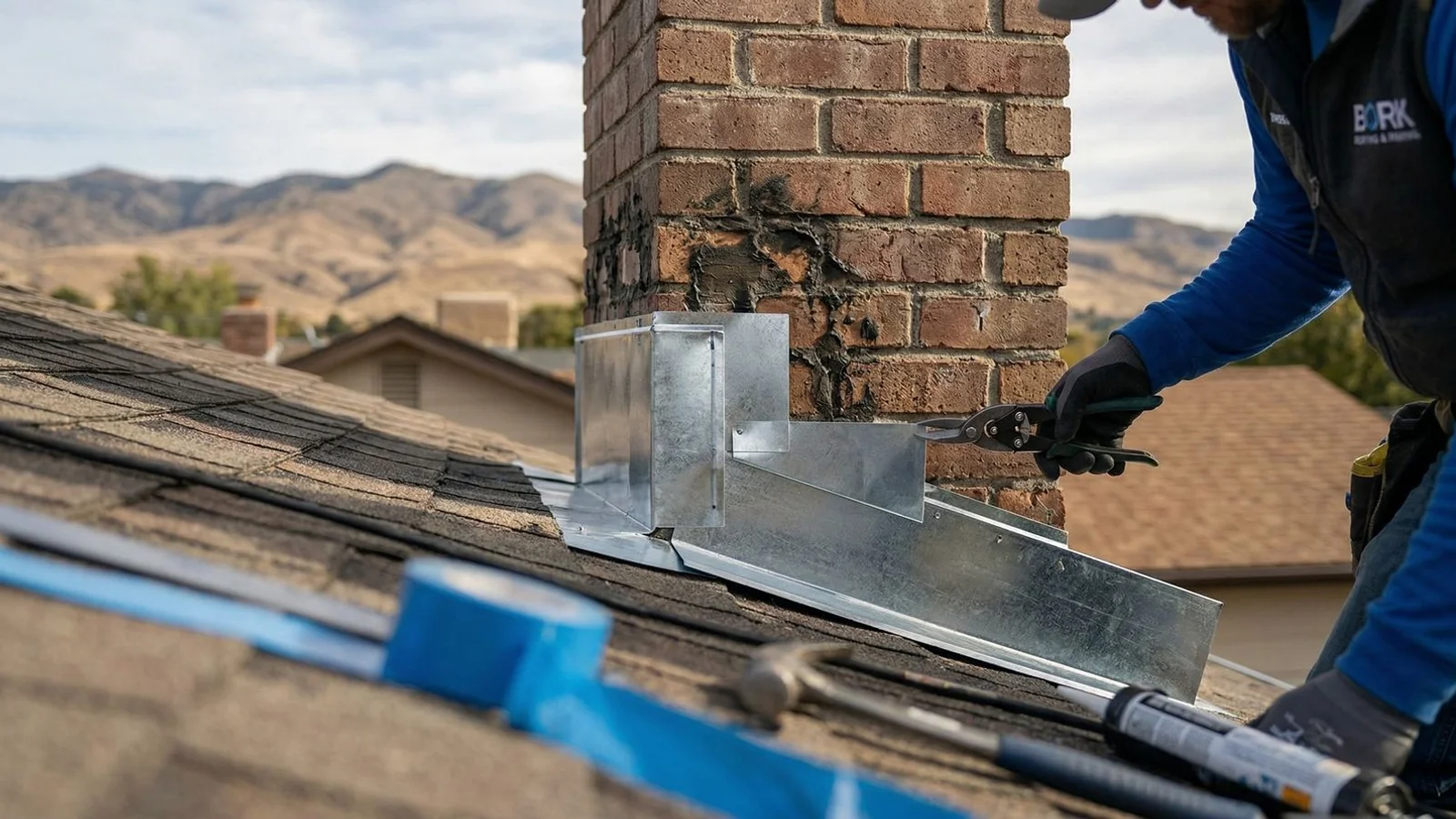
- 2008 Meridian cul-de-sac home, 17 years old, single chimney flashing leak: Repair. This $800 fix made perfect sense because there was no reason to replace an otherwise healthy surface.
- 1978 North End Craftsman, 20+ years on current roof, 3 leaks, failing flashing: Replace. Patching would buy one to two years at most before major structural damage occurred.
- 2004 Downtown Boise multi-family complex, 22-year-old TPO roof, recurring leaks: Replace. The repair estimates exceeded the 15 percent return on investment threshold.
You might still feel uncertain about where your specific property falls on this spectrum. Our team is standing by to help you make sense of the details. A simple inspection eliminates the guesswork entirely.
Final Thoughts on Repair or Replace? How to Decide What Your Boise Roof Really Needs
You now have the framework to confidently evaluate your property’s condition. Our team hopes this guide, “Repair or Replace? How to Decide What Your Boise Roof Really Needs,” provides the clarity necessary for your next steps. Making the right call protects your building from future weather damage. We are ready to help you secure the long-term safety of your investment. Call (208) 545-8226 for a free 21-point inspection today.