Our professional service team sees roof failures start small long before water actually drips into your living room. From what I have seen, catching these subtle clues early is the dividing line between a targeted professional roof repair and a full structural replacement. Recognizing the 7 warning signs your Boise roof needs repair (before it gets worse) is critical.
Most full roof replacements in the Treasure Valley currently average between $12,000 and $28,000 in 2026. That massive cost difference is exactly why paying attention matters.
We know Boise homes face a brutal combination of intense high-desert UV rays in July and heavy freeze-thaw cycles in January. These extreme swings stress your exterior materials to their breaking point. Let’s look at the clear indicators of damage, what they actually mean for your decking, and how to respond.
1. Curling, Cupping, or Cracked Shingles
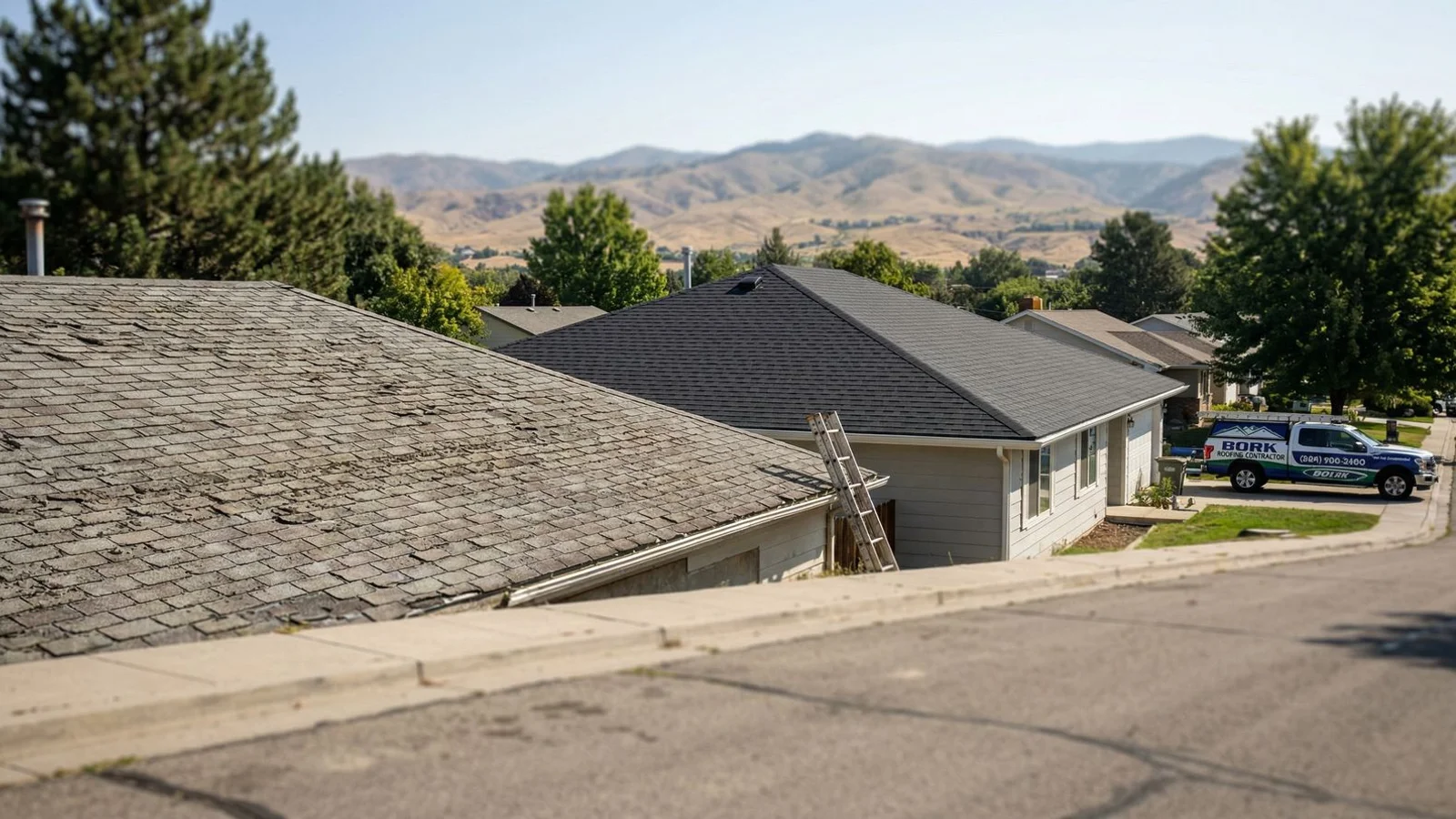
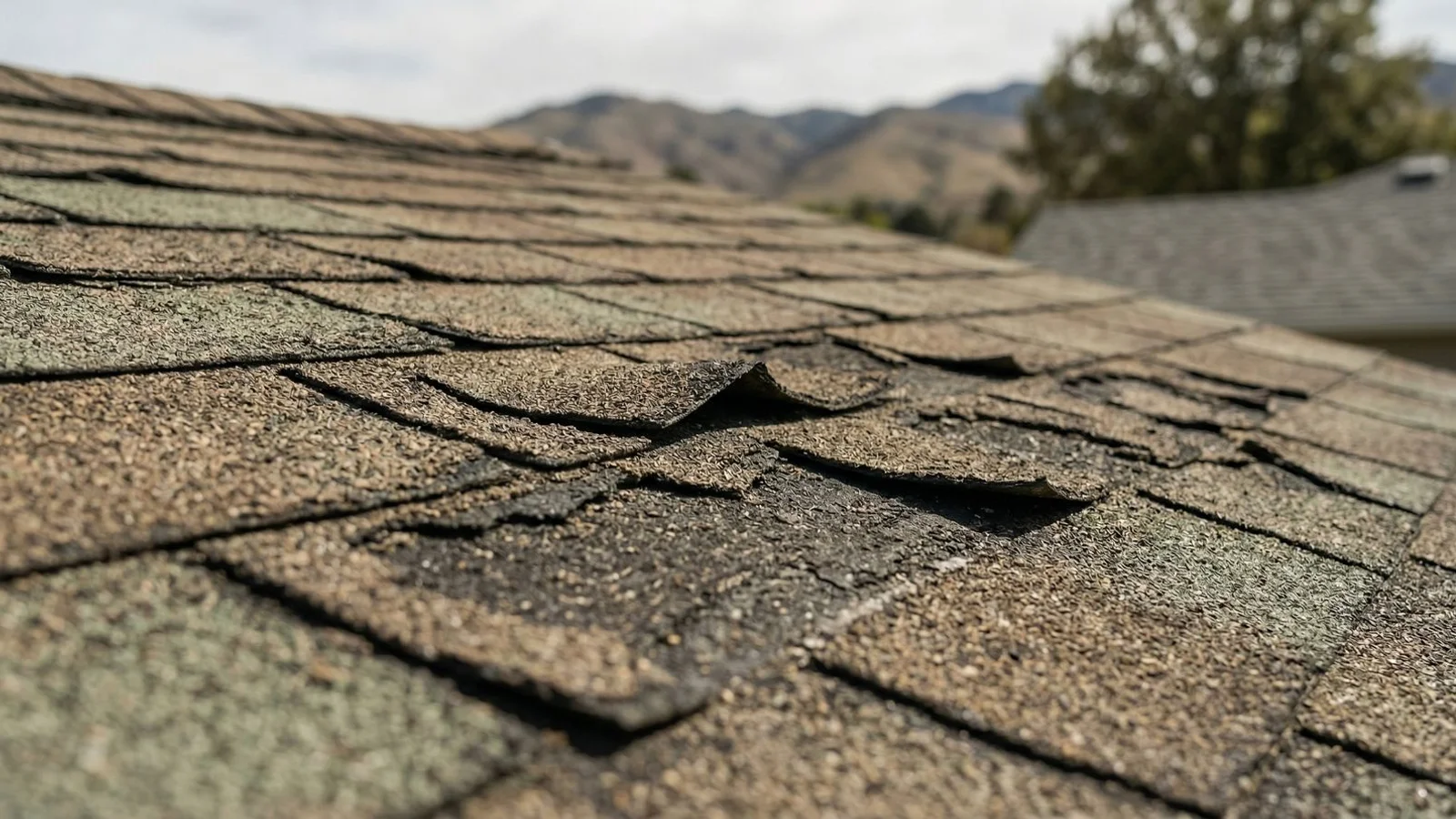
We recommend looking at your roof from the driveway on a sunny afternoon. Healthy asphalt shingles lay perfectly flat against the decking. If you see the edges lifting, which is called curling, or the centers dishing out into a cup shape, your shingles are failing.
Heat and thermal shock cause this rapid aging. Our local Boise UV index is notoriously harsh, baking the asphalt binder out of the material. Curling almost always starts on the south and west-facing exposures because they take the brunt of the afternoon sun.
You must act quickly when shingles lose their flat profile. High winds can easily catch those lifted edges and tear them completely off the deck.
Here are the specific shingle deformities to watch for:
- Curling: The edges turn upward, exposing the underlayment to wind.
- Cupping: The center turns concave, often signaling poor attic ventilation.
- Cracking: Hairline fractures appear on the surface due to thermal shock.
2. Granules in Gutters and Downspouts
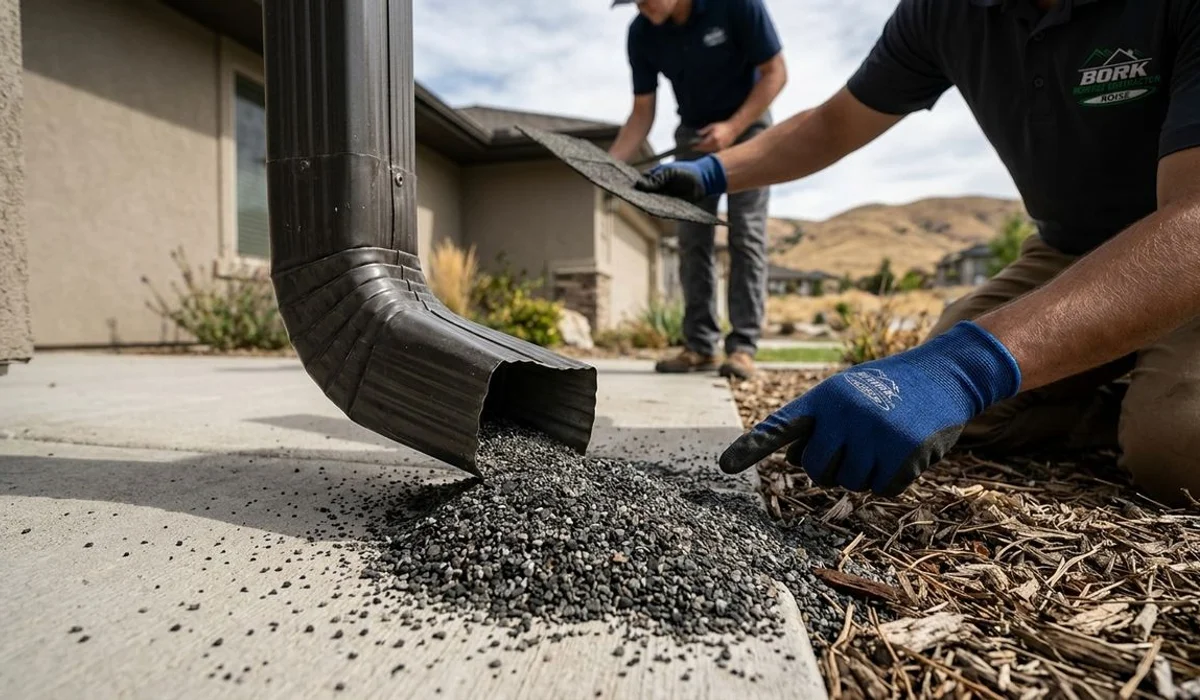
Asphalt shingles shed small granules over their normal lifespan. Heavy, sudden granule loss is a completely different story. Check your gutters and the ground directly under your downspouts after a heavy rainstorm.
We often find sand-like piles of dark gray or black granules during our post-storm inspections. These tiny stones act as sunscreen for your roof, blocking harmful UV radiation from the fragile asphalt layer beneath. Once the granules wash away, the exposed shingle mat degrades incredibly fast.
Warning: Never use a high-pressure power washer to clean your roof, as this will artificially strip the granules and void your manufacturer warranty.
A roof losing granules at a high rate will become brittle and crack within a single season. You should schedule an evaluation if you spot these gritty piles building up on your driveway or in your landscaping.
3. Daylight Through the Attic
Going into your attic on a bright, sunny day with the lights off is a highly effective diagnostic trick. Any visible daylight shining down through the roof deck means you have an active breach. The hole could be from a popped roofing nail, a missing shingle, or completely rotted sheathing.
Our crews consider this an immediate emergency. Small holes let in water, which then saturates the structural decking holding your roof together.
Most newer residential builds in Idaho use Oriented Strand Board, commonly known as OSB, for the decking material. OSB is cost-effective, but it absorbs moisture quickly and swells permanently when it gets wet. You have a very short window to seal the leak before that OSB warps and requires a costly structural replacement.
| Decking Material | Water Reaction | Risk Level |
|---|---|---|
| OSB (Oriented Strand Board) | Swells permanently, retains moisture | High risk for rot if leak is ignored |
| Plywood | Dries out and returns to shape | Moderate risk, but still requires sealing |
4. Water Stains on Ceilings or Interior Walls
Finding a brown, yellow, or coffee-colored stain on your living room ceiling confirms that water has been pooling above that spot for quite some time. The distinct dark ring is actually caused by wood tannins leaching out of your wet rafters and decking. Even if the drywall feels completely dry to the touch today, the underlying vulnerability remains.
We frequently trace these specific stains back to severe ice dams from the previous winter. A thick ridge of ice forms at the edge of your gutters, forcing melting snow to back up under the shingles.
You should never just paint over a ceiling stain with primer. The trapped moisture will inevitably lead to hazardous mold growth inside your insulation. Always have a qualified roofer investigate the attic above the stain to verify the decking is sound.
Pro Tip: If you notice peeling paint alongside a ceiling stain, it indicates active, ongoing water intrusion rather than a single, past event.
5. Sagging Roof Deck
Stand across the street from your house and carefully examine the main roofline. The ridge should look perfectly straight from end to end. Any visible sagging, dipping, or wavy sections indicate that the underlying sheathing is failing.
Our local building codes require Boise roofs to support a uniform snow load of 25 pounds per square foot. A compromised, sagging deck cannot safely hold that immense winter weight. Long-term water damage usually causes the wood to rot, losing its structural integrity.
This is a serious structural crisis rather than a simple cosmetic flaw. Waiting to fix a sagging deck puts your entire property at risk of a localized collapse during a heavy January blizzard.
Common causes of a sagging roofline include:
- Continuous water leaks rotting the trusses.
- Excessive layers of old shingles adding too much dead weight.
- Improperly spaced rafters during the original home construction.
6. Damaged or Missing Flashing
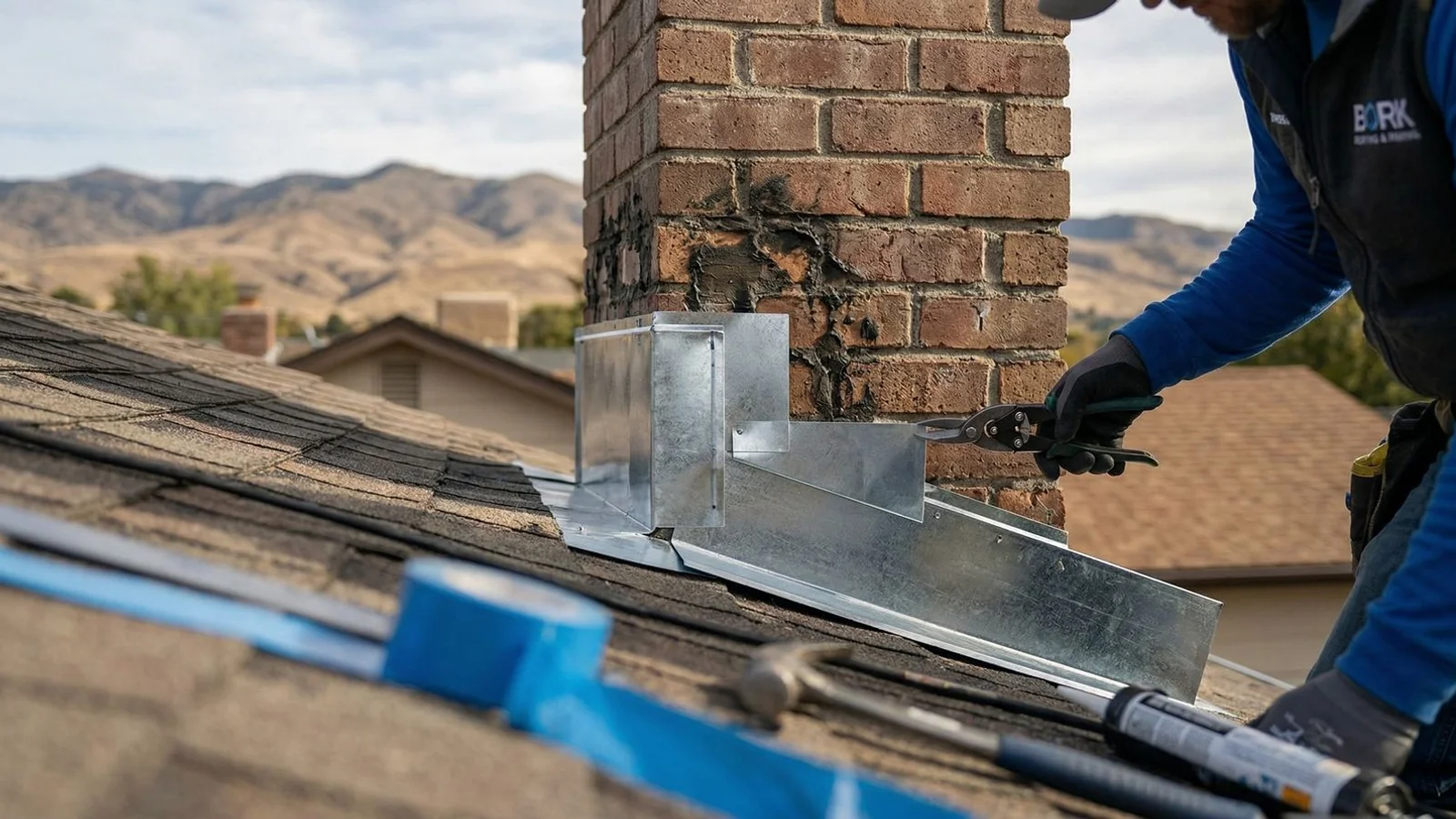
Flashing refers to the specialized metal sheets sealing the vulnerable joints around your chimneys, skylights, and attic vents. Statistics show that up to 90% of all residential roof leaks actually begin at these flashing seams. The smooth metal prevents water from seeping into the sharp transitions where shingles meet a vertical wall.
We always inspect the step flashing and counter-flashing around brick chimneys first. Look closely for rust streaks running down the brickwork, metal sections pulling away from the wall, or entirely missing sealant.
Here are the most common flashing failure points:
- The sealant around brick chimneys drying out.
- The metal step flashing pulling away from side walls.
- Exposed nails rusting through the base of skylights.
The polyurethane sealants used to secure these metal joints typically dry out and crack within five to ten years under the harsh Idaho sun. If you can stand in your attic and see the sky from below the chimney, water is already pouring in.
7. Pipe Boots Cracked or Deteriorated
Plumbing vents extend through your roof deck and are sealed with a rubber collar, commonly called a pipe boot. These flexible neoprene boots are almost always the first component to fail on a newer home. The intense Boise UV radiation bakes the soft rubber, causing it to crack and turn brittle within just 8 to 12 years.
Our repair technicians identify deteriorated boots as the number one source of mystery ceiling leaks. If the rubber looks gray, crumbly, or visibly split around the PVC pipe, the seal is broken.
You must replace these boots immediately to stop rainwater from sliding straight down the pipe into your walls. Upgrading to a premium lead or silicone boot can offer much better resistance to solar degradation.
Insider Tip: If you notice a water stain perfectly aligned with an upstairs bathroom or laundry room, a cracked pipe boot is almost certainly the culprit.
What to Do After Spotting These 7 Warning Signs Your Boise Roof Needs Repair (Before It Gets Worse)
Seeing just one of these indicators means it is time to take preventative action. If you notice any of the 7 warning signs your Boise roof needs repair (before it gets worse), a comprehensive Bork Roofing 21-point inspection is completely free, takes only 60 to 90 minutes, and catches hidden vulnerabilities before they become expensive nightmares.
We will tell you honestly whether your home needs a simple patch, a localized repair, or a full system replacement. You will never experience any high-pressure sales tactics for construction work you do not actually need.
Call (208) 545-8226 or request a free inspection online.
Our team proudly serves Boise, Meridian, Nampa, Eagle, Caldwell, Star, Kuna, and Garden City.