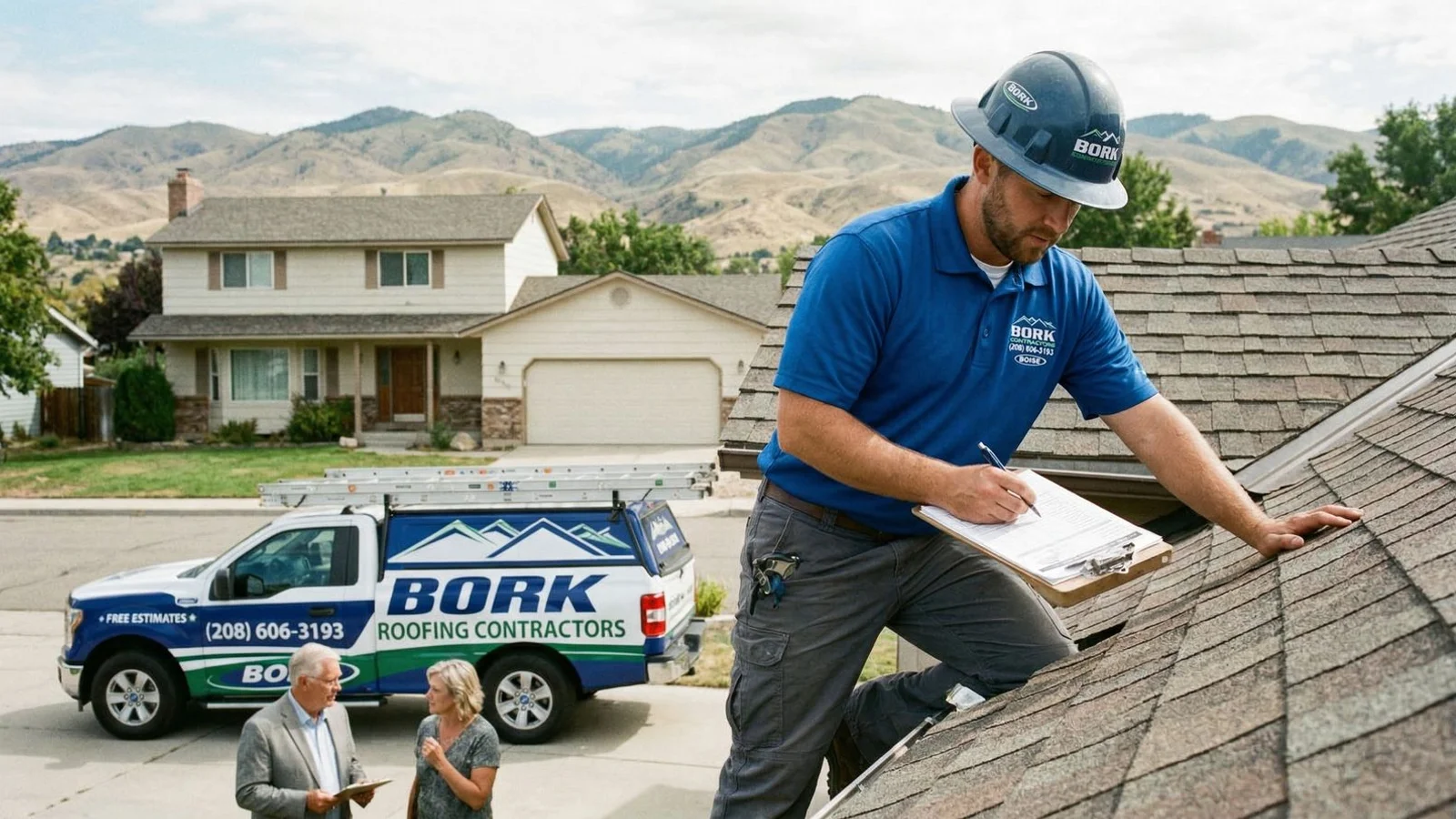
Roofs in the Treasure Valley fail in predictable seasonal patterns, making it critical to know When Should You Schedule a Roof Inspection in Boise? (Seasonal Guide). We have found that the best time to catch these failures is long before they cause expensive interior damage.
Catching problems early during a routine roof inspection can literally save you thousands of dollars in emergency repairs.
Let’s look at the data, what the seasons actually do to your shingles, and explore a few practical ways to respond.
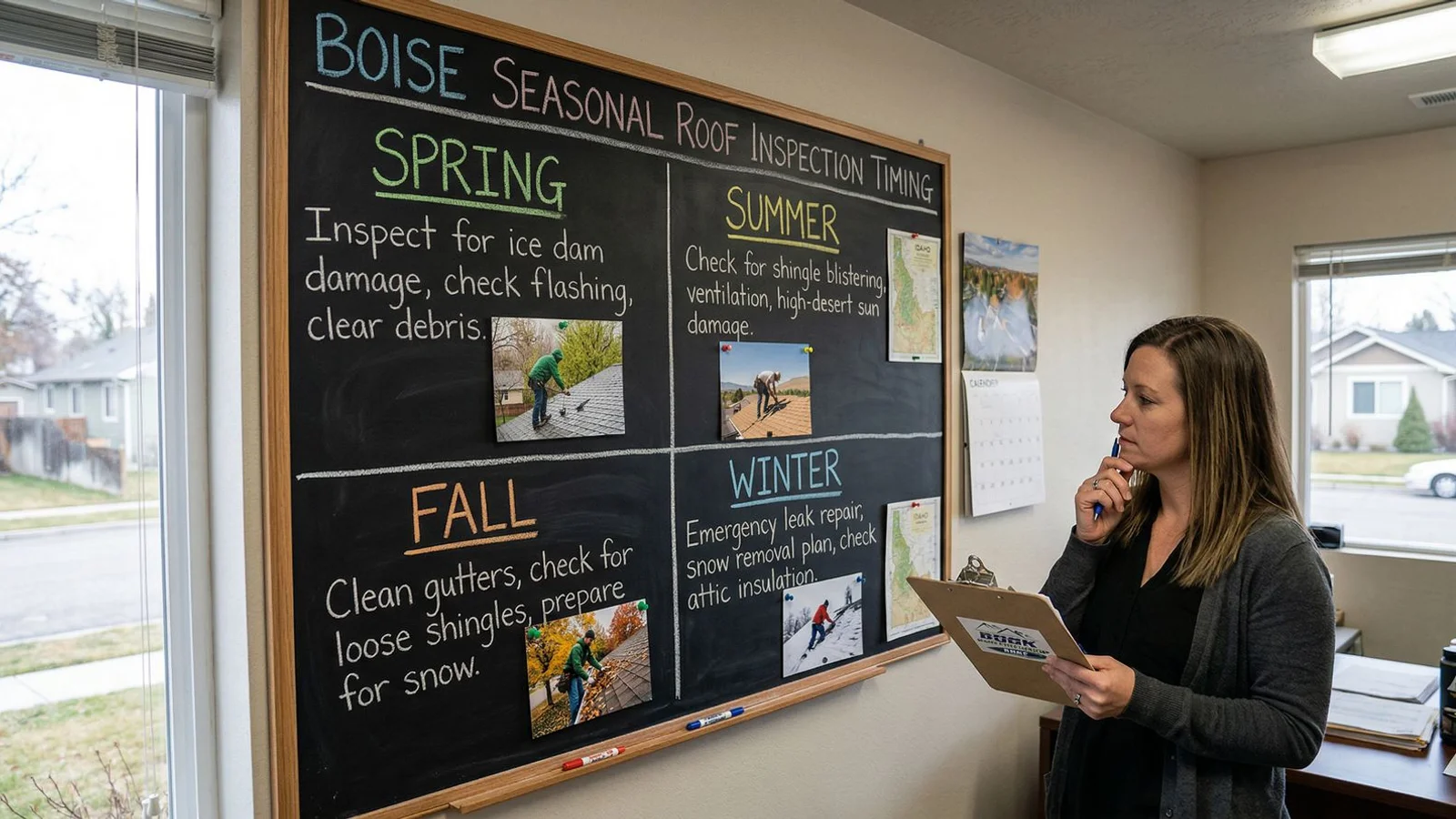
Spring (March to May): The Most Important Inspection
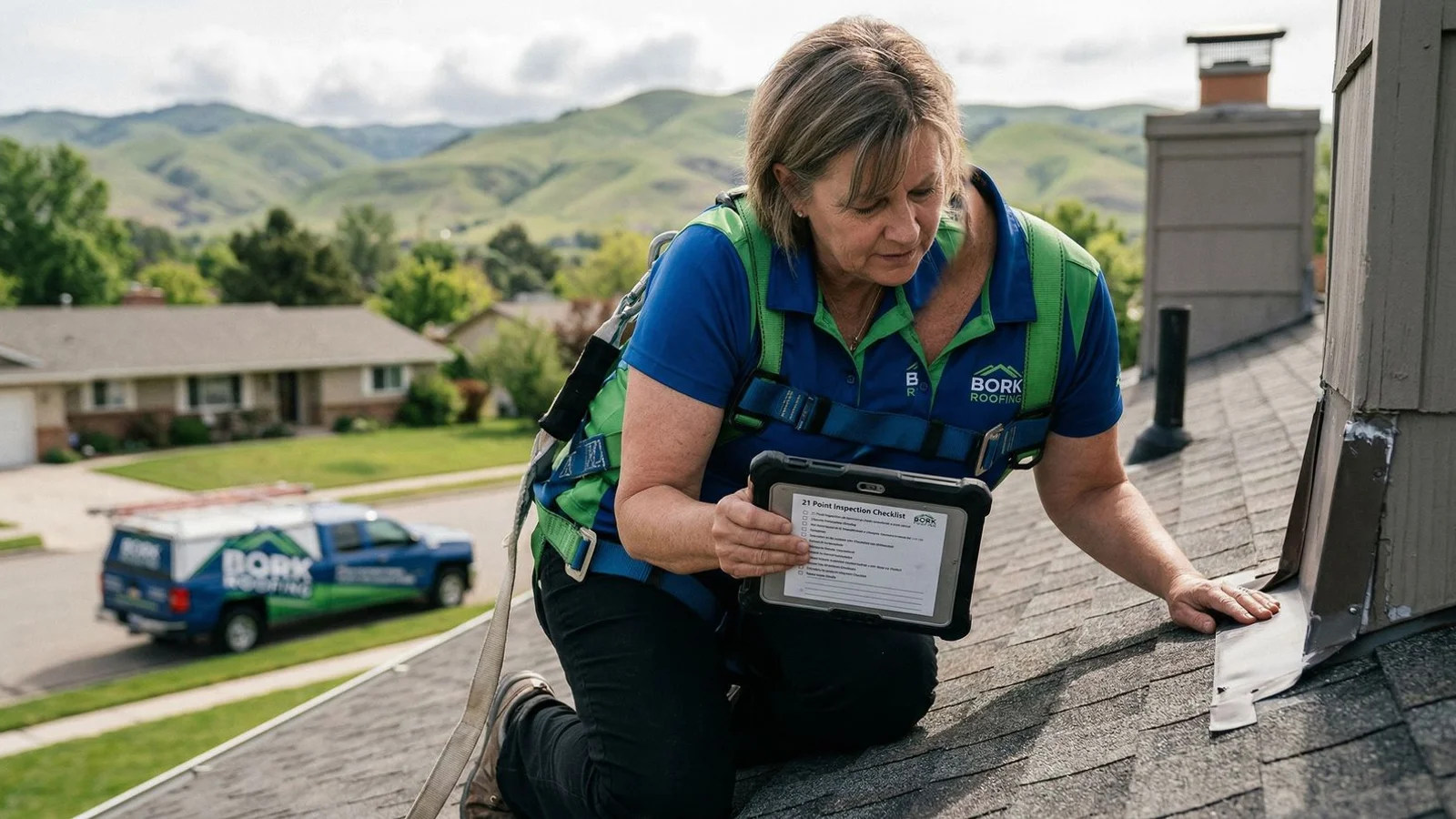
Our team recommends catching issues now, right after winter has finished flexing freeze-thaw cycles on every shingle seam. Spring is the single best time to inspect a Boise roof. Valleys have recently carried meltwater.
We always remind property owners that any winter injury is fresh and easy to spot during these months. Ice dams, if present, have already done their visible damage. A 2026 report highlights that Boise’s high-altitude sun and freeze-thaw shifts are top causes of early shingle failure.
Our local experts use this chance to catch small issues before they become a claim-worthy storm disaster. This makes spring the last calm window before summer hail season hits. Taking action now prevents massive headaches later.
What we look for in spring:
- Winter ice dam evidence: Assess eaves and valleys for pooling water signs.
- Freeze-thaw cracks: Sealant and flashing often split after cold nights and warm days.
- Damaged or loose shingles: Winter windstorms frequently loosen the protective outer layer.
- Pipe boot cracks: Cold weather accelerates the aging of these vital rubber seals.
Summer (June to August): After Hail and Wind Events
We see the majority of hail events happen in June through August, along with the biggest wind gusts. Summer acts as Boise’s peak storm season. Idaho Code section 41-1329 mandates prompt processing for insurance claims.
Our priority is making sure you file on time because hail damage gets harder to assess as bruises age. Scheduling an inspection within 30 days of any significant storm in your neighborhood is highly recommended. Most insurance carriers strictly limit claim windows to 12 months.
What triggers a summer inspection:
- Any hail event with stones larger than 0.75 inches
- Sustained winds over 50 mph
- Fallen tree limbs or major debris
- Any active leak inside the building
Fall (September to November): Pre-Winter Prep
Our inspectors know that a slightly loose shingle in October will easily become a gaping hole by February. Fall inspections catch minor issues before winter weather amplifies them. The Department of Energy recommends an attic insulation rating of R-49 to R-60 for Boise homes in Climate Zone 5.
We use the autumn months to address this attic ventilation and insulation, as both are directly tied to ice dam prevention. The goal is to secure your property before the first freeze. Proper preparation lowers your heating bills and protects the structural deck.
What we check in fall:
- General roof condition before winter hits
- Gutter cleanliness and drainage efficiency
- Attic ventilation adequacy
- Insulation depth and distribution
- Ice-and-water shield coverage at eaves
Winter (December to February): Emergency Only
We do not recommend scheduling proactive inspections during these freezing months unless you already suspect a severe problem. Dead of winter is not the time for casual maintenance. Cold weather, ice, and snow make roof walks incredibly dangerous.
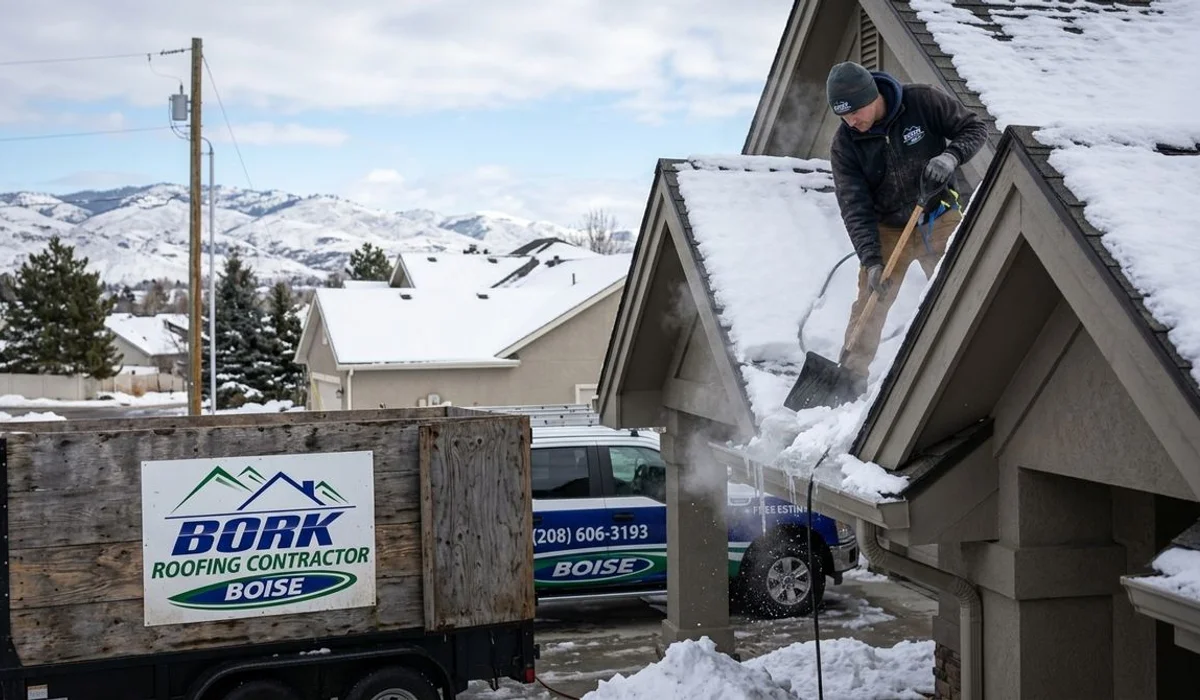
Our emergency crews step in when heavy accumulation pushes the limits of your structure. The City of Boise building code requires residential roofs to withstand a uniform snow load of 25 pounds per square foot. Winter is strictly when the disasters happen, including ice dams, freeze-thaw leaks, and wind-damaged shingles.
What triggers a winter call:
- Active interior leak (call immediately)
- Visible ice dam formation
- Major snow load concerns exceeding local limits
- Wind damage from a severe winter storm
The 4 Events That Trigger an Immediate Inspection
We strongly advise property owners to act immediately if specific emergency situations occur. Certain situations require action regardless of the season. Industry data shows that a full roof replacement in Boise averages between $12,000 and $28,000 in 2026.
Our technicians can often perform a simple patch before rot sets into the underlying wood. Catching a leak early is much cheaper than ignoring it. A quick response minimizes water intrusion.
- Interior leak: Any sign of water coming through a ceiling requires immediate attention.
- Major storm: Hail, high wind, or fallen trees can compromise the entire structure in minutes.
- Insurance claim denial: Get a second opinion if an adjuster rejects your initial request.
- Before listing your home: Catch hidden issues before buyers find them during their appraisal.
When Should You Schedule a Roof Inspection in Boise? (Seasonal Guide)
We suggest a proactive schedule based on the exact age of your covering. Regular checkups maximize the lifespan of your materials. High altitude UV rays and algae can reduce a standard 25-year asphalt shingle lifespan to just 15 years without proper care.
Our routine checks keep those manufacturer warranties valid. This is why adherence to a maintenance timeline matters. Catching mid-life material degradation prevents sudden failures.
| Roof Age | Inspection Frequency | Primary Risk Factor |
|---|---|---|
| Under 10 years old | Every 3 to 5 years | Minor storm damage or installation defects |
| 10 to 20 years old | Every 2 years | Mid-life material degradation and UV wear |
| Over 20 years old | Every year | High-risk zone for leaks and failing sealant |
We want to help you maximize the life of your property. Protecting your investment requires catching problems early.
Bork Roofing homeowner inspections are always free of charge.
Our team is ready to assist you today. Call (208) 545-8226 or schedule online to get on the calendar.
Let this When Should You Schedule a Roof Inspection in Boise? (Seasonal Guide) serve as your blueprint for year-round protection.