If you live anywhere between the Boise Foothills and Caldwell, you know what a Treasure Valley spring windstorm sounds like. Dealing with Boise wind damage roofs becomes an unfortunate reality when gusts over 60 mph rattle the windows and test every building component on your property.
We regularly see these high winds expose hidden weaknesses in older materials.
The reality is that standard asphalt shingles often struggle against Idaho weather patterns. Our Bork Roofing storm damage restoration crews spend every spring repairing the exact same types of failures across the region. Let us look at the facts behind wind uplift and explore exactly how to spot the damage.
How Wind Damages Asphalt Shingles
Asphalt shingles resist wind through two primary mechanisms, which include mechanical nailing and thermal self-sealing. A properly installed roof relies on a specific pattern of fasteners and a factory-applied asphalt sealant strip.
Heat activates this adhesive, bonding each shingle to the one directly below it. Our installers see wind damage occur the moment either of these defenses fails.
The Critical Sealant Bond
Sealant failure usually happens when a roof goes on during cold weather. Shingles installed in late fall might never get hot enough to activate the adhesive strip.
We frequently find this specific failure mode on Boise properties. Loose tabs then lift easily even in moderate 30 mph breezes.
Nailing Patterns and Idaho Building Codes
Proper fastening prevents blow-offs when the wind catches a loose edge. The Idaho residential building code generally expects structures to withstand 115 mph wind speeds.
We always exceed the minimum code by using a 6-nail pattern for every installation. Standard contractors often use only four nails per shingle to save time. Modern premium materials like GAF Timberline HDZ or Owens Corning Duration carry 130 mph wind resistance ratings.
Our teams know those top-tier ratings only apply if the contractor uses the strict 6-nail installation method. Skimping on fasteners leaves your home completely vulnerable.
Aged Shingle Brittleness
Old shingles lose their flexibility as UV exposure bakes the asphalt over time. A 20-year-old shingle will crack or snap off completely during a severe weather event.
Our inspectors notice that a 5-year-old shingle simply shrugs off that exact same gust. The loss of natural oils makes the fiberglass mat rigid and fragile.
What Wind Damage Looks Like
Visual signs of storm impacts range from obvious debris to nearly invisible structural breaks. We categorize these failures based on how quickly they allow water into your home.
| Damage Type | Visibility from Ground | Leak Risk Level | Required Action |
|---|---|---|---|
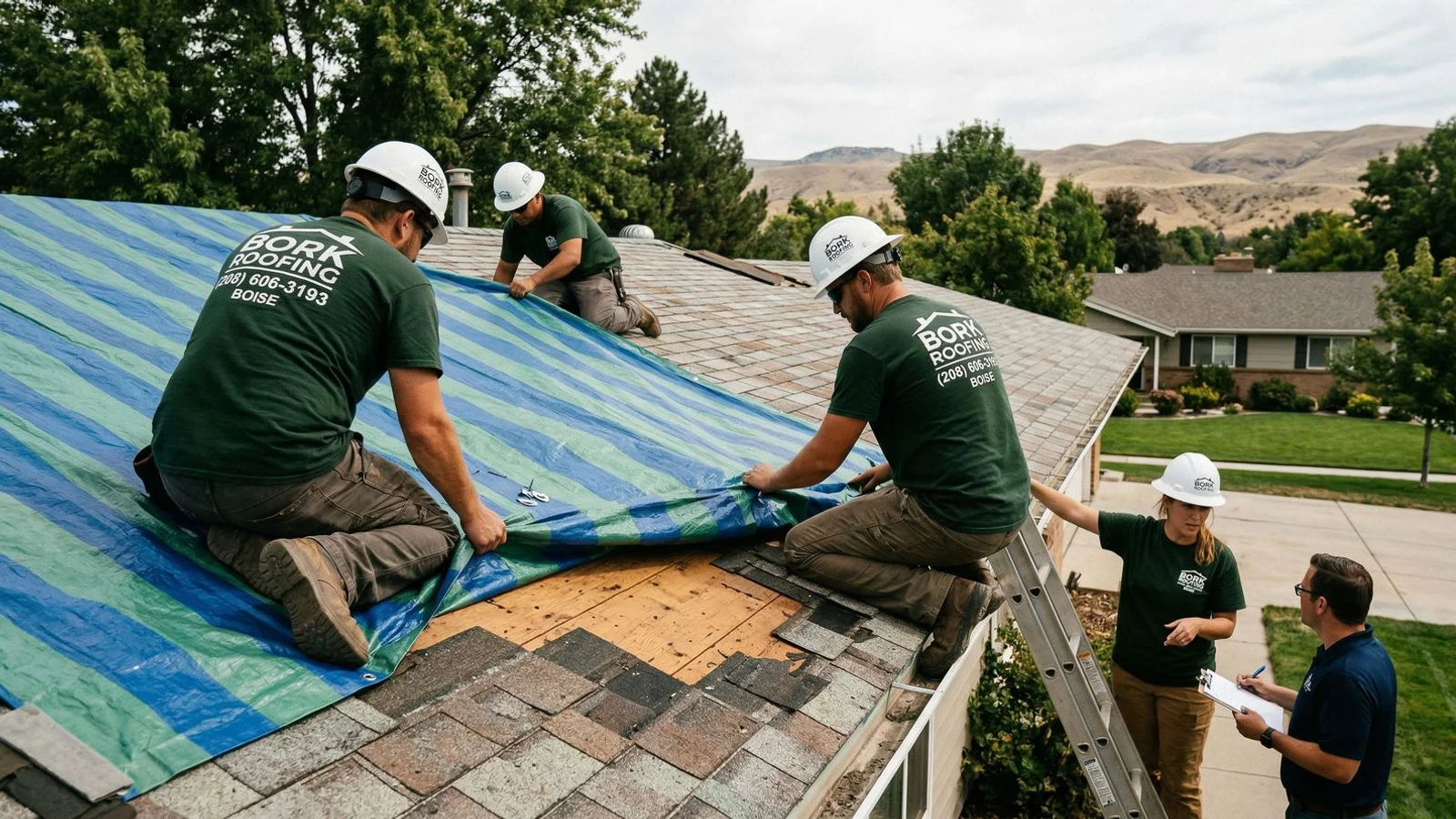
| Missing Tabs | High (Debris in yard) | Immediate/Severe | Emergency tarping & repair |
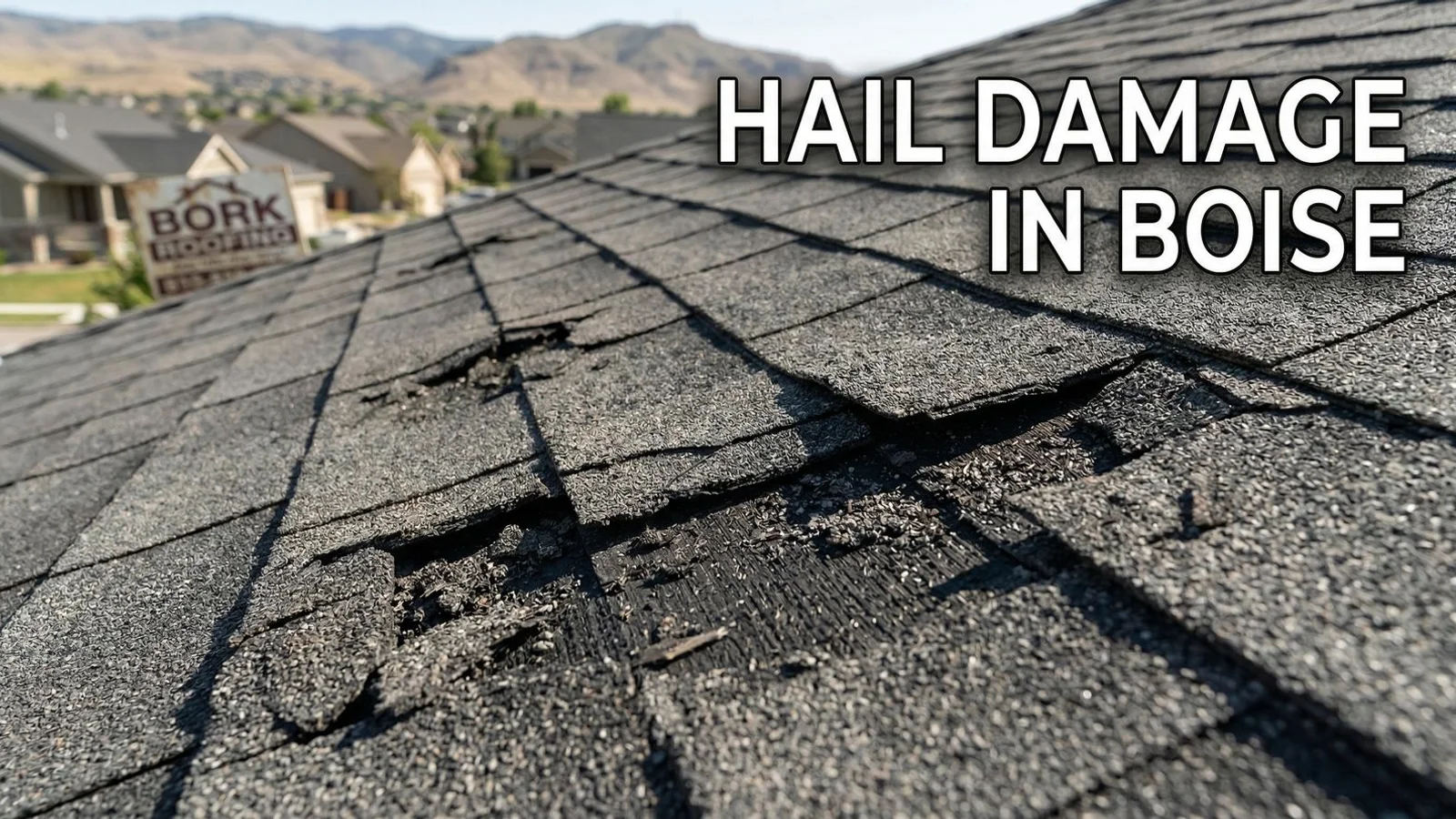
| Folded Shingles | Medium (Visible bumps) | High (Next rain) | Replace affected sections |
| Creased Shingles | Low (Looks flat) | Moderate (Over time) | Professional inspection |
| Exposed Decking | High (Black patches) | Critical | Immediate replacement |
Missing Tabs
Missing tabs present the most obvious problem for a property owner. Individual shingle pieces tear off and scatter across your lawn or driveway.
You can usually spot this bare spot clearly from the ground.
Lifted and Folded Shingles
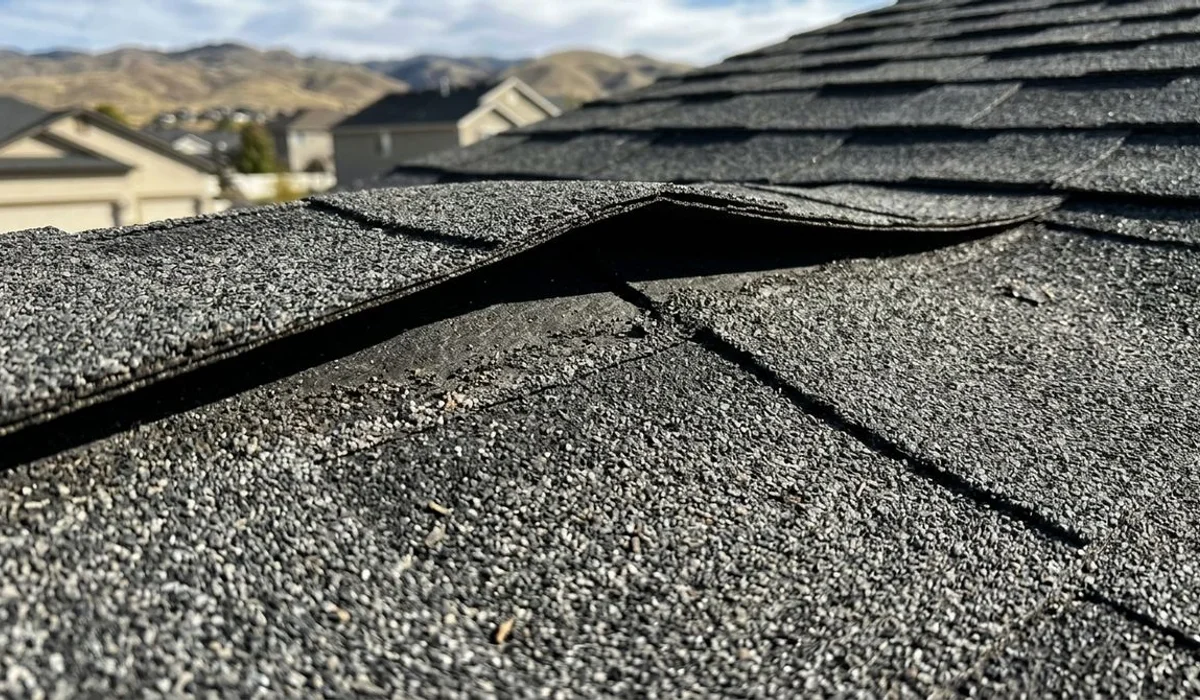
Lifted and folded shingles remain attached but no longer sit flat against the decking. Wind pulls them up, bends them backward, and breaks the crucial seal strip.
Our repair crews know these folded shingles will leak during the very next rainstorm. Prompt attention is required to prevent water from pooling.
Creased Shingles
Creased shingles represent the worst and most frequently missed type of damage. High winds bend the shingle upward, snap the internal fiberglass mat, and then drop the tab back down flat.
You might look up and think the roof appears completely intact. We identify these broken seals by looking for a dark horizontal line where the granules have shed. A loose, creased shingle will lift again and eventually break off.
Exposed Underlayment
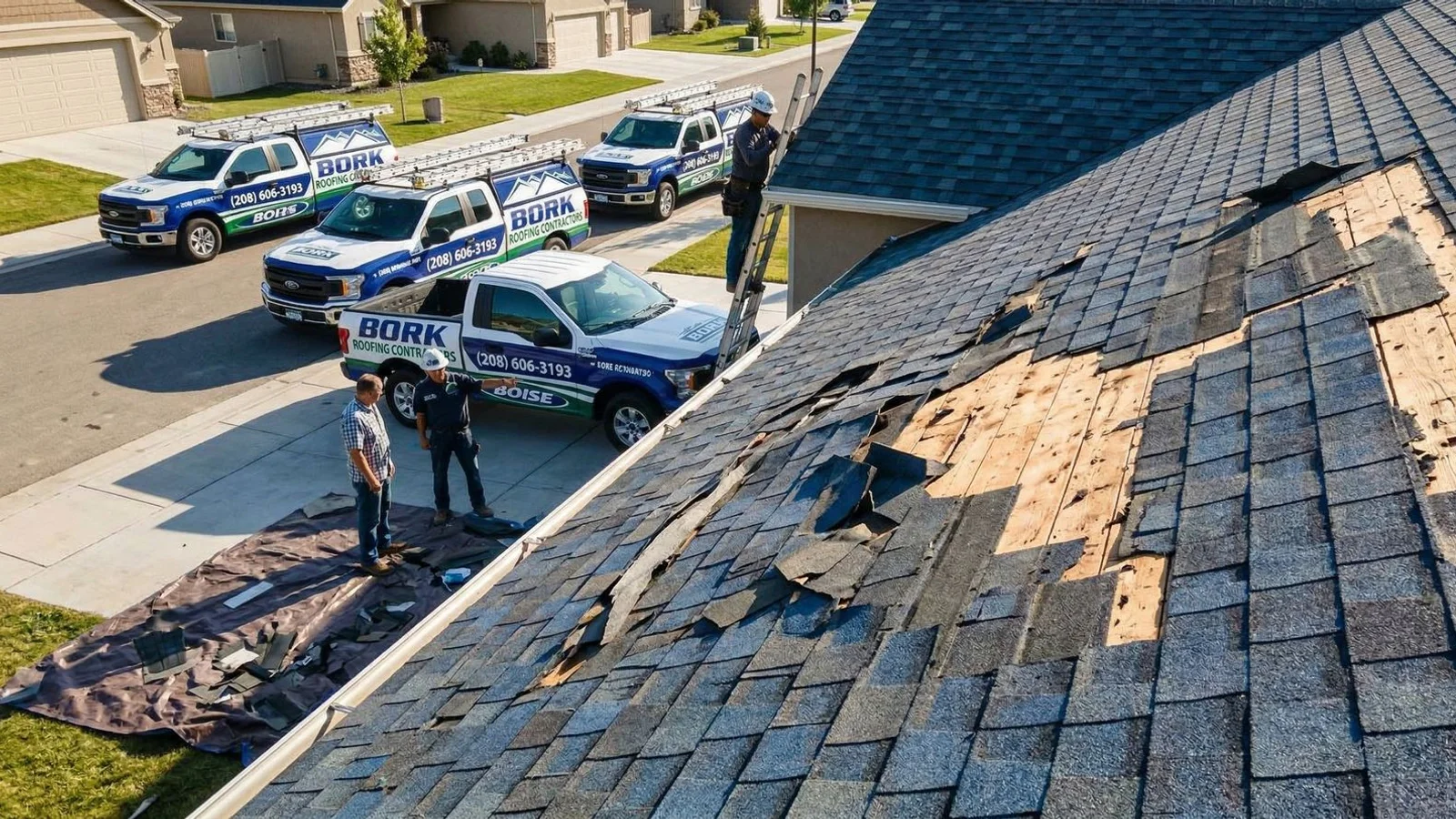
Exposed underlayment means the protective asphalt layer is entirely gone. Black tar paper or synthetic fabric visible from the ground signals an immediate emergency.
Our emergency dispatch team treats this scenario as a critical priority. Your underlying wood decking now lacks protection and remains totally vulnerable to water rot.
Neighborhoods That Get Hit Hardest
Boise features unique geography that funnels weather systems directly into specific subdivisions. We track local storm data to predict exactly where the highest call volume will originate.
During the massive December 2025 windstorm, gusts ripped across the region and knocked out power for thousands. Our crews saw directly how an atmospheric river combined with high winds can devastate residential properties. The National Weather Service routinely issues warnings for 60 mph gusts moving through the valley.
Certain geographic pockets take the brunt of these localized weather events. We consistently respond to specific wind-prone zones in the following areas:
- Boise Foothills and Hidden Springs: Exposed slopes catch direct gusts on the hills.
- Eagle Foothills: Custom homes on ridgelines face high velocity sheer.
- State Street corridor: Long stretches of flat terrain funnel western winds.
- Kuna and south Meridian: Open agricultural lands provide zero windbreaks.
If you live in any of these areas, wind damage after a major event is highly probable.
Boise Wind Damage Roofs: What to Do After a Wind Event
Taking immediate action prevents a minor missing shingle from turning into an expensive interior water damage restoration. We recommend a systematic approach to assessing your property.
- Walk your yard. Start by walking the perimeter of your yard. Look for torn-off pieces of flashing, broken tree branches, and small asphalt granules near your downspouts.
- Scan with binoculars. Our advice is to grab a pair of binoculars to scan the roofline from the safety of your driveway. Check for obvious asymmetries or dark patches that indicate missing material.
- Stay on the ground. Never climb onto a storm-damaged roof yourself. Unpredictable footing, loose materials, and broken fasteners create severe fall hazards. We utilize advanced drone inspection software like DroneDeploy to safely capture high-resolution images of your property. This technology maps steep slopes and spots hidden issues in minutes without risking a dangerous fall.
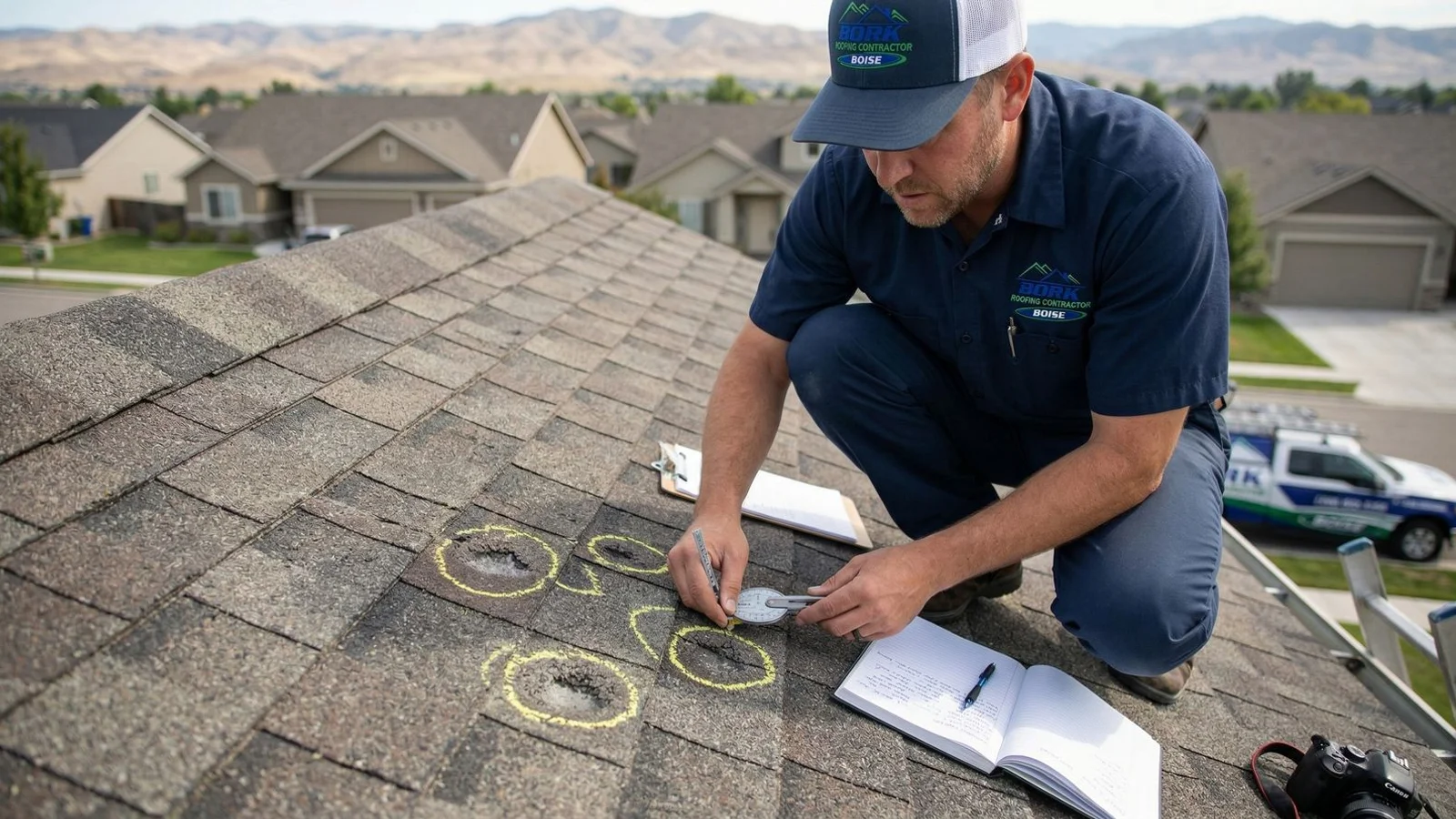
- Schedule an inspection. Schedule a professional assessment within a week of the storm. Creased damage remains notoriously difficult to spot from the ground, but it photographs perfectly for insurance documentation while the damage is fresh. We know that average roof repair costs in Boise currently run between $350 and $850 for typical fixes. Catching a lifted tab early keeps your costs near that minimum service fee rather than escalating into a full replacement.
Is Wind Damage Covered by Insurance?
Yes, wind stands as a covered peril under every standard Idaho homeowner policy.
We advise filing a claim if the repair estimates significantly exceed your deductible. Thorough documentation becomes critical because of the Idaho Department of Insurance rules on matching.
Insurance policies might not automatically pay to replace undamaged materials simply to match the color of a new repair, making detailed slope documentation essential.
Our staff builds comprehensive reports detailing every affected slope to help you secure the maximum coverage you deserve. Bork Roofing handles the entire claim process for you from start to finish.
Call Bork Roofing at (208) 545-8226 for a free post-wind inspection, and let us repair your Boise wind damage roofs across Meridian, Nampa, Eagle, and the rest of the Treasure Valley.